 blog
7 Hard Water Side Effects on Skin and Hair
Last Updated: October 26, 2026
Quick Summary
Hard water side effects on skin and hair come from calcium and magnesium left behind after water evaporates. These minerals form soap scum that clings to skin and coats each hair strand, causing tightness, dryness, itching, dullness, frizz, and breakage. Hard water is a comfort and cosmetic issue, not a health hazard.
- Calcium and magnesium react with soap to form insoluble residue known as soap scum.
- Hard water is not considered a health hazard, though it may aggravate existing skin conditions.
- Most shower filters do not remove hardness minerals at all.
- Whole-home softeners remove calcium and magnesium before water reaches your taps.
- Confirm hardness with a water test before choosing any treatment equipment.
Table of Contents
- What Hard Water Actually Does to Your Skin and Hair
- Hard Water Skin Symptoms: Dryness, Tightness, and Itching
- Hard Water Effects on Hair: Frizz, Breakage, and Dullness
- How to Test Water Hardness at Home
- What the Research Says, and What It Doesn't
- Choosing a Water Softener for Hard Water
- A Symptom-Based Troubleshooting Guide
- Book Your Free Water Test and Consultation
- Frequently Asked Questions
What Hard Water Actually Does to Your Skin and Hair
Hard water side effects on skin and hair come down to one thing: minerals left behind after the water dries.
Those minerals do not evaporate with the water. They stay on your skin, your scalp, and every strand of hair.
The result is a cluster of complaints homeowners describe the same way: tight skin after a shower, dull hair, soap that refuses to lather. For the full practical fix, see our guide on how to get rid of hard water in your house.
But first, here is what most guides get wrong: they treat hard water as a health problem. The better evidence says it is mostly a comfort and cosmetic issue, and that changes how you should respond.
Hard Water Skin Symptoms: Dryness, Tightness, and Itching
Hard water skin symptoms typically include dryness, a tight feeling after washing, itching, flaking, and sometimes visible residue or a chalky film.
Here is the mechanism in plain terms. Calcium and magnesium react with the fatty acids in soap and body wash to form insoluble salts, the sticky film most people call soap scum.
The skin barrier connection is the part most guides gloss over.
Which Skin Conditions May Be Aggravated
Hard water is not a cause of eczema, psoriasis, or acne, and no water treatment should be sold as a treatment for them. What the evidence and clinical experience do support is that hard water can aggravate existing conditions by adding irritation on top of already-compromised skin.
- Eczema and atopic dermatitis. People with a compromised skin barrier often report more stinging, itching, and flare frequency when washing in hard water. The residue and the altered soap chemistry both add insult to an already-irritated barrier.
- Psoriasis. Scaling and plaque areas can feel more irritated after washing in hard water, though the underlying condition is immune-mediated and unrelated to water minerals.
- Acne and blemishes. Soap scum and mineral residue can clog pores and trap oil, which some people find worsens breakouts. This is a residue effect, not a hormonal one.
If you have a diagnosed skin condition, talk to your doctor or dermatologist before assuming water is the driver. Water treatment may reduce irritation, but it is not a treatment for a medical condition.
Why Some People Notice It More Than Others
Exposure and individual susceptibility matter more than most articles admit. Two households on the same water supply can have very different experiences.
- Bathing frequency and duration. Longer, hotter, more frequent showers increase mineral exposure and strip more of the skin's natural oils.
- Skin type. Dry or sensitive skin tends to react more than oily skin.
- Pre-existing conditions. Eczema, psoriasis, and rosacea change how much irritation a given exposure produces.
If you recognize these symptoms at home, our guide to the signs of hard water in your home walks through the other clues worth checking.
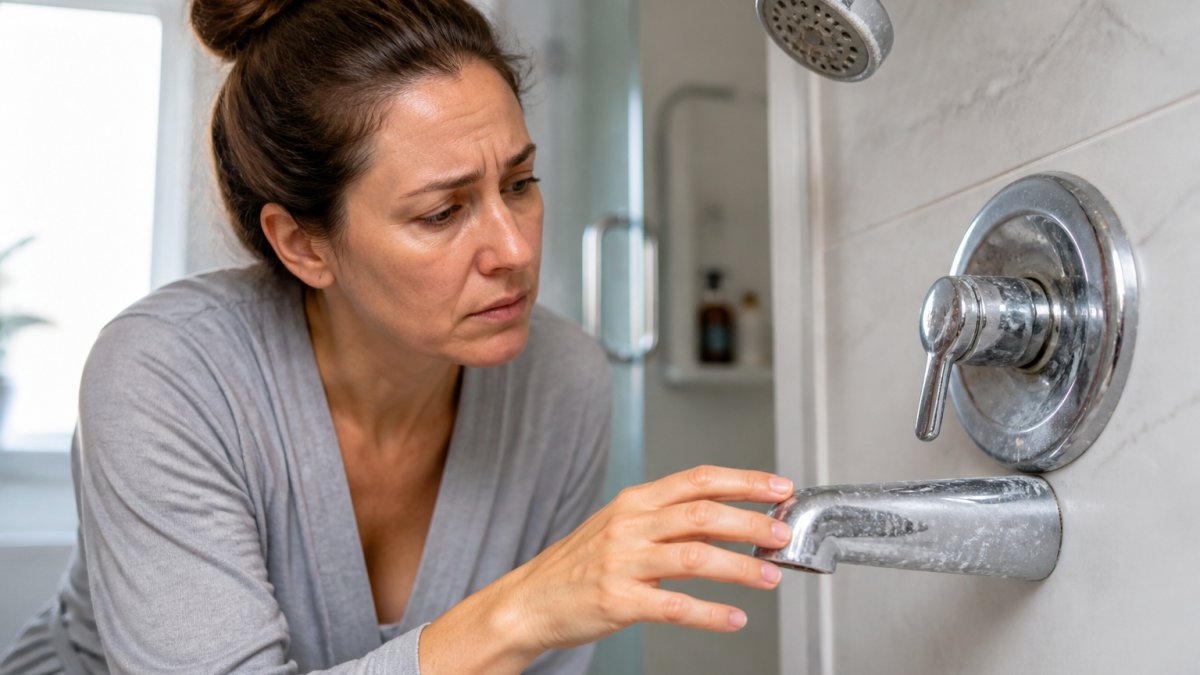
Why Soap and Shampoo Stop Lathering Properly
Lather is the first thing to go. When calcium and magnesium bind with soap, they reduce its ability to foam. You end up using more product to get the same clean feeling, and more product means more residue left on skin and hair.
Watch out: reaching for a stronger shampoo or a harsher body wash usually backfires. It strips more oil without solving the mineral problem underneath.
Hard Water Effects on Hair: Frizz, Breakage, and Dullness
Hard water effects on hair show up as dryness, dullness, frizz, tangles, and breakage.
The coating also blocks moisture from getting in. Hair that cannot absorb moisture becomes brittle over time, and brittle hair splits and breaks more easily.
Scalp effects follow the same pattern. Residue builds up at the roots, which can leave the scalp dry, itchy, or flaky.
A study on hard water and hair examined whether water hardness contributes to hair fragility.
How to Test Water Hardness at Home
How to test water hardness at home is simpler than most people expect. You have three practical options:
- Check your municipal water report. Many Ontario utilities publish annual water quality reports that list hardness. This gives you a starting range, not a reading for your tap.
- Use a test strip. Dip, wait, and compare the color to the chart. Fast and cheap, but the range is broad.
- Book a professional water test. A technician measures hardness directly at your tap and checks for related issues like iron, chlorine, and total dissolved solids.
Watch out: a strip that reads "hard" tells you nothing about what else is in the water. Our water testing service covers hardness and the related parameters that shape the right treatment plan, and if you would like to start there, you can GET YOUR FREE WATER TEST to get a clear picture of your water before choosing any equipment.
What the Research Says, and What It Doesn't
Most articles on hard water side effects either overstate the science or skip it entirely. The honest middle ground is more useful: separate what is well established from what is plausible but unproven, so you can judge claims, including ours, on their merits.
What Is Well Established
- Hard water contains dissolved calcium and magnesium. This is basic water chemistry, not a health claim.
- Those minerals react with soap to form insoluble residue. The soap scum mechanism is well understood and easy to demonstrate.
- Hard water is not considered a health hazard. A review of potential health impacts of hard water notes that the World Health Organization found no known adverse health effect from hard water, and that very hard water may even supply some dietary minerals.
What Is Plausible but Not Firmly Proven
- That hard water directly causes skin barrier damage. The mechanism is plausible and consistent with dermatological understanding, but large controlled trials are limited.
- That hard water worsens eczema. Observational studies and clinical experience point this way, and a study on hard water and hair examined related questions about hair fragility, but the evidence base is not strong enough to call it settled.
- That softening water resolves skin or hair symptoms. Many homeowners report improvement, but reported improvement is not the same as a controlled trial result.
What Is Overstated or Unsupported
- That hard water causes disease. It does not.
- That a water softener treats eczema, psoriasis, or acne. It may reduce irritation, but it is not a medical treatment.
- That alkaline or mineral-added water delivers proven health benefits. Taste and mouthfeel can change; medical claims cannot be supported.
That distinction matters when you shop. Anyone selling a system on the basis of curing skin disease is overselling. Anyone selling one on the basis of removing the minerals that leave residue is on solid ground.
If you have a diagnosed skin condition such as eczema or psoriasis, talk to your doctor or dermatologist. Water treatment may reduce irritation, but it is not a treatment for a medical condition.
Choosing a Water Softener for Hard Water
A water softener for hard water removes calcium and magnesium from the water supply before it reaches your taps. That stops the mineral residue at the source rather than trying to wash it off afterward.
You have two broad paths:
- Shower filters attach at the showerhead. They reduce some contaminants and can help with chlorine, but most do not remove hardness minerals.
- Whole-home softeners treat all the water entering the house, so every tap, shower, and appliance gets the benefit.
Shower Filters vs. Whole-Home Softening
| Option | What It Removes | Best For | Trade-off |
|---|---|---|---|
| Shower filter | Some chlorine, sediment, odors | Renters, quick trial | Does not remove hardness minerals |
| Whole-home softener | Calcium and magnesium | Homeowners with confirmed hard water | Requires installation and salt maintenance |
A shower filter is a reasonable stopgap. Our overview of water softener benefits for your home and skin covers what changes once the minerals are gone.
As an authorized Pentair dealer, we size systems to your actual test results rather than a generic guess. Oversized and undersized units both cause problems, and the difference shows up in salt use and softness consistency.
A Symptom-Based Troubleshooting Guide
Use this checklist to narrow down what you are dealing with:
- Skin feels tight after showering → likely mineral residue; test hardness
- Soap will not lather → classic hardness sign; confirm with a test
- White crust on faucets and shower heads → mineral buildup; softening addresses it
The order matters. Confirm the water first, then choose equipment. Guessing leads to buying the wrong thing.
Book Your Free Water Test and Consultation
Guessing at your water quality gets expensive. A proper test tells you exactly what you are dealing with, and that is the only reliable basis for a treatment plan.
At Pure Life H2O, we have spent over 26 years helping homeowners across the Greater Toronto Area solve hard water and related water quality problems.
Our team handles installation, maintenance, and troubleshooting locally, so you are not chasing a call center when something needs attention.
Get started with Pure Life H2O and book your free water test and consultation. Browse our water softener systems or call to schedule a visit, and we will show you exactly what is in your water and what it will take to fix it.
Frequently Asked Questions
Can hard water cause dry or itchy skin?
It can contribute to dryness and itchiness for many people. Calcium and magnesium in hard water leave a residue that can interrupt the skin's natural moisture balance, and soap lathers less freely, so more product stays behind after rinsing. A 2013 review summarized in PubMed Central notes the World Health Organization found no known adverse health effect from hard water, so treat these as comfort and cosmetic effects rather than a health hazard. If dryness persists after softening, see a dermatologist.
How can I tell if hard water is affecting my skin and hair?
Look for a cluster of signs rather than one. Common clues include a filmy feeling after washing, soap that won't lather well, white scale on shower heads and taps, tight skin after showering, and hair that feels straw-like or dull. Confirm it by testing your water rather than guessing. A home hardness test strip gives a quick reading, and a professional water test identifies hardness along with iron and other factors that affect treatment choice.
Does a water softener fix hard water effects on hair?
Softening removes the calcium and magnesium that leave residue on hair, so shampoo rinses more cleanly and many homeowners notice less dullness and stiffness. A 2013 study by Srinivasan and colleagues examined whether water hardness may cause hair fragility, though the available summary does not report its results, so treat softer water as a practical improvement rather than a proven repair for damaged hair. Pair softening with a gentle shampoo and regular trims.
How do I test water hardness at home?
Start with a test strip from a hardware store: dip it in a sample of cold tap water and match the colour to the chart. For a more precise reading, book a professional water test, which measures hardness in grains per gallon or milligrams per litre and also flags iron, manganese, and chlorine. Test before buying any treatment system so the equipment is sized to your actual water, not a neighbour's.