 blog
Best Kinetico Alternatives for Your Home
Table of Contents
- Why Homeowners Look Beyond Kinetico
- Kinetico vs Other Water Softeners: Key Differences
- Best Water Softener for City Water: Salt-Based and Salt-Free Options
- Whole-House Water Filtration System Solutions
- Water Treatment System Cost and Maintenance: What to Budget
- Salt-Based Versus Salt-Free: Which Approach Works for Your Home
- How to Choose the Right Alternative for Your Household
- Conclusion
- Frequently Asked Questions
Last Updated: October 14, 2026
Why Homeowners Look Beyond Kinetico
Homeowners searching for kinetico alternatives are usually motivated by cost, system limitations, or a desire to compare local options. Kinetico has a solid reputation, but many households find alternatives deliver better value, easier maintenance, or a better fit for their water conditions.
Water treatment isn't one-size-fits-all: a system that works for municipal water with moderate hardness may struggle with well water containing iron and sulfur. At Pure Life H2O, we've spent over 26 years helping homeowners find the right solution by starting with water testing, not brand loyalty.
The best kinetico alternatives depend on your water quality challenges, household size, budget, and whether you value professional local support.
Kinetico vs Other Water Softeners: Key Differences
Kinetico built its reputation on demand-initiated regeneration, which regenerates only when needed rather than on a fixed schedule, saving salt and water versus timer-based systems. That advantage matters most for households with variable water usage.
Other softeners use different triggers: meter-based systems track consumption and regenerate at a threshold, while timer controls regenerate on a set schedule regardless of use.
Kinetico systems are non-electric, which appeals to homeowners worried about power outages, but that also means no digital controls, remote monitoring, or customization flexibility. Many modern alternatives offer smart controls, app-based monitoring, and home automation integration.
Installation and service availability matter more than brand name: a premium system installed poorly will underperform, and kinetico alternatives with strong local support often beat premium brands installed by less experienced providers.
Best Water Softener for City Water: Salt-Based and Salt-Free Options
For municipal water, the most common concern is hardness, the calcium and magnesium that cause scale buildup and reduce soap effectiveness. Salt-based ion exchange systems are the proven solution, removing hardness minerals completely with decades of field performance behind them.
Salt-based softeners pass hard water through a sodium-charged resin bed; minerals stick to the resin and sodium takes their place. When the resin saturates, the system regenerates with brine, flushing minerals away and recharging the resin. The result is genuinely soft water: no scale, better soap performance, and longer appliance life.
Salt-free conditioners don't remove hardness; they prevent minerals from forming scale. Using crystallization or template-assisted crystallization, they transform minerals into suspended particles that don't stick to surfaces. The water isn't technically "soft," but scale buildup stops. These systems appeal to homeowners who dislike adding salt, want less sodium, or face discharge restrictions.
For most city water, a salt-based system delivers faster, more complete results. Salt-free systems work better as complements or for mild hardness with strong sodium concerns.
System Type | Hardness Removal | Scale Prevention | Salt Required | Best For |
|---|---|---|---|---|
Salt-Based Softener | Complete | Excellent | Yes | Municipal water with moderate to high hardness |
Salt-Free Conditioner | None (prevents scale only) | Good | No | Mild hardness or homes avoiding salt |
Hybrid System | Partial | Excellent | Minimal | High hardness with sodium concerns |
Whole-House Water Filtration System Solutions
A whole-house filter treats water at the point of entry, protecting every tap, unlike under-sink or pitcher filters that only treat drinking water. These systems address sediment, chlorine, chloramine, and taste and odour issues that softeners don't handle.
Many homeowners combine softening with filtration: the softener removes hardness minerals, the filter removes chlorine, sediment, and other contaminants, delivering clean, soft water throughout the home.
Whole-house filters come in several forms: sediment filters trap sand and rust, activated carbon removes chlorine and odours, and multi-stage systems layer media to address multiple issues.
The key consideration is flow rate. A whole-house filter must deliver adequate pressure and volume during peak demand, when showers, laundry, and dishwashing run simultaneously. Undersized filters cause noticeable pressure drops, so professional sizing ensures the system keeps up with actual usage.
Water Treatment System Cost and Maintenance: What to Budget
Most competitor guides tell you to "consider lifetime cost" and stop there. This section breaks down what that actually looks like, so you can compare a Kinetico alternative against a Kinetico quote on equal terms.
Equipment and installation. Costs for equipment and professional installation depend on capacity, valve type, and whether a bypass and drain are already in place. Salt-free conditioners often cost less on equipment but should not be priced as softener replacements, because they do not remove hardness minerals.
Salt and regeneration. A salt-based softener uses salt per year for a typical household, depending on hardness, capacity, and regeneration method. Demand-initiated and metered regeneration reduce salt and regeneration water versus fixed-timer systems, the core efficiency argument Kinetico and its closest alternatives both make.
Filters and media. Carbon and sediment cartridges need replacement periodically, while a backwashing filter's media may last several years. Reverse osmosis membranes and pre/post filters add another recurring cost. Ask any dealer for the replacement interval and price per cartridge in writing, because this is where cheap systems quietly become expensive.
Service and repairs. Budget for an annual or biennial service visit, and treat control-valve or resin problems as a repair reserve rather than a surprise.
A simple 10-year view. Add equipment and installation, annual salt or filter costs, a service allowance, and a repair reserve. Two systems with a $1,500 purchase-price gap can flip in ranking once salt use, regeneration water, and service access are included.
Competition Bureau guidance on misleading environmental and performance claims is worth reading before you accept any "salt-free softening" or "maintenance-free" claim at face value.
Salt-Based Versus Salt-Free: Which Approach Works for Your Home
Most homeowners get this decision wrong because the two technologies are marketed as interchangeable. They aren't. One removes hardness minerals from the water; the other changes how those minerals behave so they're less likely to stick to surfaces.
What each technology actually does. A salt-based ion exchange softener passes water through resin that swaps calcium and magnesium for sodium or potassium, so hardness minerals leave the water. The result is genuinely soft water: no scale, better soap lather, and reduced mineral load on water heaters, dishwashers, and laundry equipment.
How to tell which one you need. The honest answer comes from a water test, not a sales pitch. Hardness is measured in grains per gallon or milligrams per liter as calcium carbonate.
Where salt-free makes sense. Salt-free conditioning suits genuinely mild hardness, households avoiding sodium, brine discharge concerns, or spaces with no room or drain for a brine tank. It's a poor fit for severe hardness, well water with iron or manganese, or anyone expecting soft-water soap performance.
Where salt-based wins. For most households on municipal supply with meaningful hardness, a correctly sized salt-based softener remains the most reliable way to protect plumbing and appliances.
Well water changes the calculus. On a private well, hardness is rarely the only issue. Iron, manganese, sulfur odor, and bacteria are common, and neither a softener nor a conditioner solves them alone.
How to verify performance claims. Ask for documented capacity in grains, rated flow rate in gallons per minute at a stated pressure drop, and water used per regeneration. Those three numbers let you compare systems on something other than marketing language.
Decision Factor | Salt-Based Softener | Salt-Free Conditioner |
|---|---|---|
Removes hardness minerals | Yes | No |
Prevents scale deposits | Yes | Partially |
Uses salt | Yes | No |
Adds sodium to water | Yes, small amount | No |
Handles severe hardness | Yes | Poorly |
Handles iron, manganese, sulfur | No, needs pretreatment | No |
Best fit | Moderate to high hardness, municipal or pretreated well water | Mild hardness, sodium or discharge concerns |
Health Canada guidance on drinking water quality and sodium is a useful reference if sodium intake is part of your decision.
How to Choose the Right Alternative for Your Household
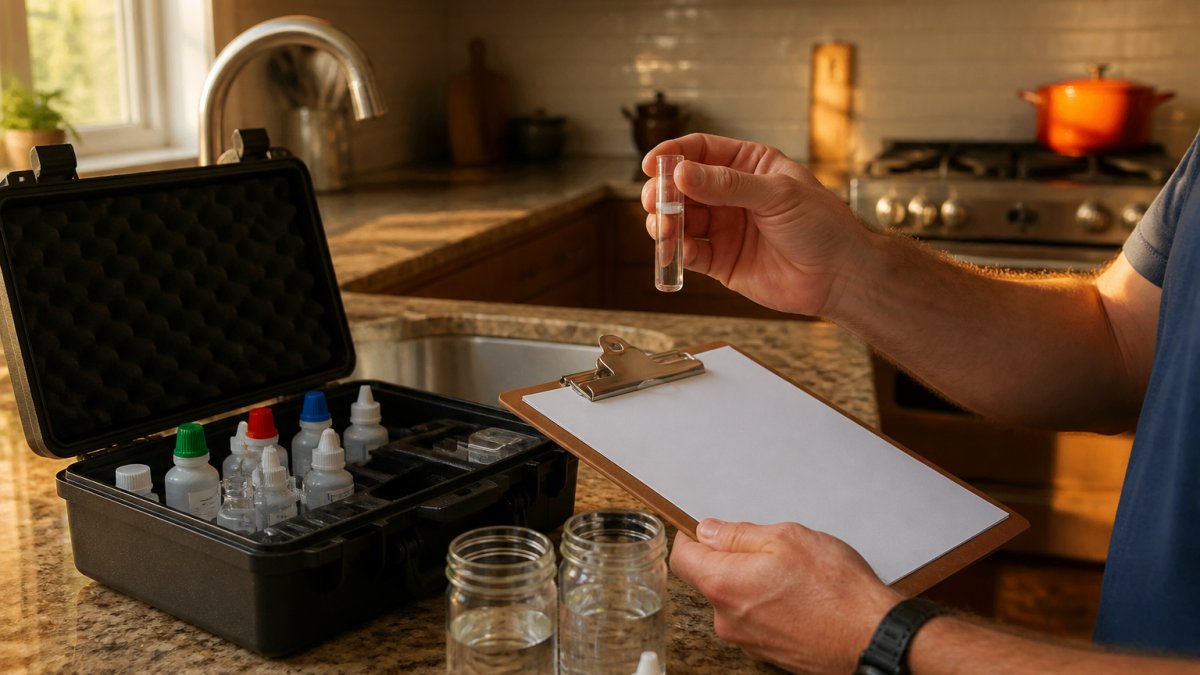
Start with water testing. You can't choose the right system without knowing what's in your water. Testing reveals hardness, iron content, pH, chlorine or chloramine, sediment, and bacterial concerns, pointing directly to the technologies you need.
Household size and usage patterns matter. A system sized for four people will struggle if you add a teenager or hot tub. Peak demand, with simultaneous showers, laundry, and dishwashing, determines the flow rate you need. Undersized systems cause pressure problems; oversized systems waste water during regeneration and cost more.
Local availability and service support are often overlooked but critical. A system is only as good as the technician who installs and maintains it, and limited service availability means delays and higher costs when problems arise. Pure Life H2O's 26 years serving the region means we understand local water conditions and maintain supplier relationships.
Consider your budget realistically. Factor in equipment, installation, ongoing maintenance, filter or salt replacement, and potential repairs. A system that fits your purchase budget but strains your maintenance budget is a poor choice, and buying more system than you need wastes money.
Finally, ask about warranties and guarantees. Reputable alternatives back their systems with substantial warranties covering equipment defects, and some offer performance guarantees for specified hardness reduction or contaminant removal.
Conclusion
Finding the right kinetico alternatives means moving past brand names and focusing on your actual water challenges, household needs, and budget. Salt-based softeners, salt-free conditioners, whole-house filters, and hybrid systems each solve different problems, and the best choice depends on water testing results, household size, local water conditions, and your priorities around cost, maintenance, and performance.
We recommend starting with a free water test to identify exactly what you're treating. From there, a clear picture emerges: which technologies you need, what size system fits your household, and what total cost of ownership looks like over 10-15 years. Health Canada's guidance on drinking water quality provides standards for safe water, and understanding where your water stands against those standards helps prioritize which issues matter most.
At Pure Life H2O, we've helped homeowners across the region navigate these decisions. Our approach combines professional water testing, transparent cost discussions, and expert installation tailored to your home's specific needs. Ontario Ministry of Environment guidance on private well water testing outlines testing requirements for well water; if you're on a private system, this becomes essential reading.
Get your free water test with Pure Life H2O. We'll identify exactly what's in your water, explain your options without pressure, and recommend the system that delivers the best results for your household's unique situation.
Frequently Asked Questions
What are the main differences between Kinetico alternatives and traditional water softeners?
Kinetico alternatives vary in regeneration method, tank design, and technology. Some use demand-initiated regeneration (like Kinetico), while others rely on timer-based systems. Salt-based systems use ion exchange to remove hardness minerals, whereas salt-free conditioners prevent scale without removing minerals. Key differences include upfront cost, ongoing maintenance, water waste during regeneration, and how well they handle specific contaminants like chlorine or iron.
Do I need a water softener, a whole-house filter, or both?
This depends on your water quality. A water test reveals hardness levels, chlorine content, sediment, and other contaminants. If you have hard water and scale buildup, a softener addresses that. If you're concerned about chlorine taste, odor, or sediment, a whole-house filter is essential. Many households benefit from both: a softener handles hardness while a filtration system removes chemical and physical contaminants for better drinking water quality.
How much should I expect to spend on a water treatment system and installation?
Costs vary significantly based on system type, capacity, and local installation complexity. A professional water test helps determine what you actually need, which directly affects pricing. Installation, ongoing salt or filter replacement, and service calls are separate expenses to budget for. Get quotes from multiple providers to compare total cost of ownership, not just the equipment price. Many providers offer financing options to spread costs over time.
Which water softener brands are practical alternatives to Kinetico?
Several reputable brands offer comparable functionality. Salt-based systems from established manufacturers use proven ion exchange technology for hardness removal. Salt-free conditioners appeal to homeowners wanting to avoid salt consumption and wastewater. Whole-house filtration systems from major water treatment brands address chlorine, sediment, and taste issues. The best alternative depends on your specific water quality concerns, household size, and whether you prefer salt-based softening or salt-free conditioning.
Looking for a Kinetico Alternative in Toronto & the GTA?
Pure Life H2O offers professional installation of Clack and Pentair water softeners throughout Toronto and the GTA. Our systems provide reliable hard water treatment, efficient regeneration, and local service.