 how-to
Residential Water Testing Services GTA: 2026 Homeowner Guide
Table of Contents
- Residential Water Testing Services in the GTA: What Homeowners Need to Know
- What Residential Water Testing Checks For: Bacteria, Metals, and More
- How to Test Well Water at Home: A Step-by-Step Sampling Guide
- Well Water Test for Bacteria: Why It Matters and What to Expect
- Coliform Bacteria in Well Water: Interpreting Results and Next Steps
- Rotten Egg Smell in Well Water: Causes and Testing Options
- Choosing a Residential Water Testing Service in the GTA: Accreditation, Pricing, and Turnaround
- Frequently Asked Questions
Last Updated: October 16, 2026
Residential Water Testing Services in the GTA: What Homeowners Need to Know
Residential water testing services GTA homeowners rely on do one job: tell you what's actually in your water before you spend money fixing it.
Whether your water comes from a private well or a municipal line, a proper test removes the guesswork, telling you if bacteria, metals, or minerals are present and at what levels.
Most guides treat all homes the same, but a rural well and a house on city water face different risks, so testing should match your source.
What Residential Water Testing Checks For: Bacteria, Metals, and More
A standard water test screens for three groups: bacteria, metals and minerals, and chemical contaminants.
Bacteria are the first concern for any private supply.
Metals and minerals include lead, iron, manganese, arsenic, and hardness. These affect taste, staining, and long-term health.
Chemical contaminants include nitrate, chloride, and volatile chemicals. Nitrate often comes from fertilizer or septic runoff.
Health Canada sets the guidelines labs test against, so ask any provider which guideline values they report against before you book.
How to Test Well Water at Home: A Step-by-Step Sampling Guide
Getting a clean sample matters more than the test itself. A contaminated sample gives a false result, so you either treat a problem you don't have or miss one you do.
Step 1: Pick the Right Bottle for the Right Test
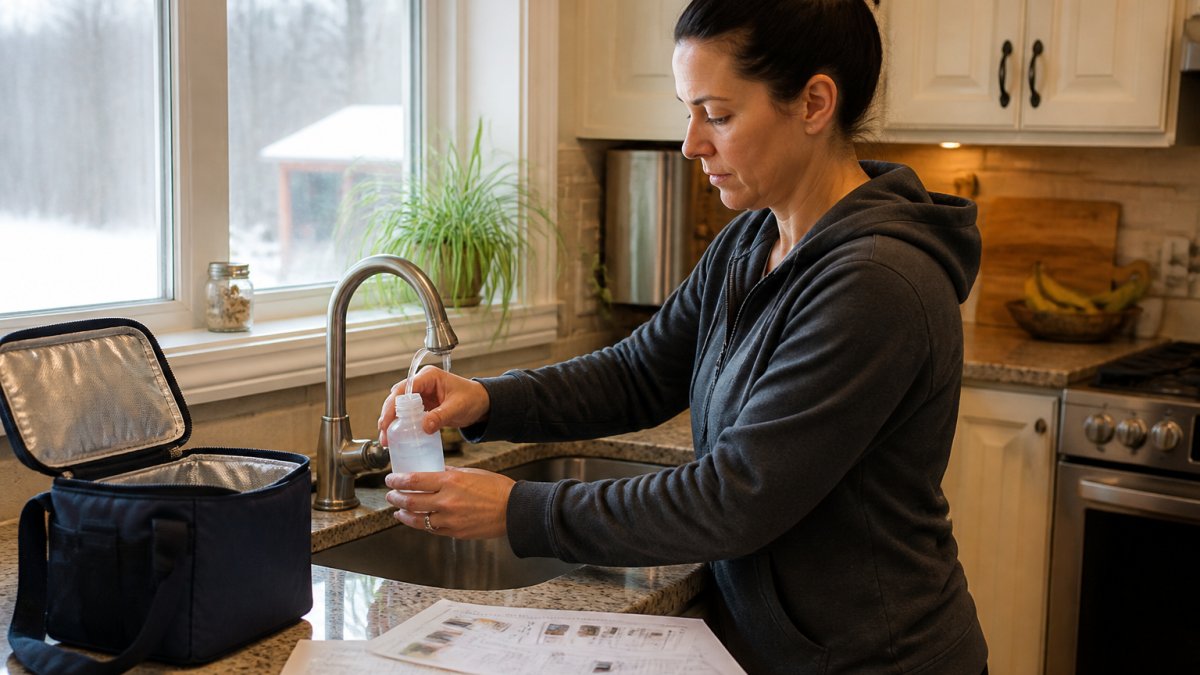
Bottles are not interchangeable. A bacteria test needs a sterile bottle with a chlorine-neutralizing tablet, since residual disinfectant can kill the bacteria the lab is trying to detect. A metals test needs a bottle prepped with nitric acid so dissolved metals stay in solution.
Use only the bottle the lab supplies for that specific test. Never rinse it, transfer water into a household jar, or reuse a bottle.
Step 2: Choose the Right Tap and Clear the Line
Sample from a tap you actually drink from, ideally a cold kitchen tap with the aerator removed. Run cold water for several minutes to clear the line. Avoid a tap that passes through a softener, carbon filter, or reverse-osmosis unit unless you want to know what the treated water looks like.
Step 3: Collect the Sample Correctly
For a routine bacteria sample, fill the bottle to the marked line, cap it immediately, and don't touch the inside of the cap or bottle mouth.
For a private well, sample from a tap after the pressure tank, not from the wellhead, unless the lab instructs otherwise. If you have a treatment system, sample both before and after it when you are trying to isolate a problem.
Step 4: Keep It Cold and Get It There Fast
Bacteria in a warm sample can multiply or die off, so the clock matters. Most labs want bacterial samples delivered within 24 to 48 hours and reject anything older. Keep the bottle cool in a cooler bag with an ice pack, but don't freeze it. Metals and chemistry samples are more forgiving, but follow the lab's stated hold time.
Step 5: Submit With the Paperwork
Most labs require a chain-of-custody form recording who collected the sample, when, and where. Fill it out completely and keep your copy. If you drop the sample at a public health unit, ask whether they forward it to a provincial lab and how long that adds. If you use a courier or drop box, confirm the cut-off time, because a late sample often sits until the next business day.
Sampling Municipal Tap Water and Household Plumbing
For city water, the source is treated, so the questions are usually about your own plumbing. Sample from a cold kitchen tap, run the line first for a routine test, and use a first-draw sample when lead or copper is the concern, older homes with lead service lines, lead solder, or brass fixtures are the common culprits. If you have a softener or filter, decide in advance whether to test the raw or treated water.
Sampling a Private Well
Wells change with the seasons and nearby activity. A test after a heavy storm, a plumbing repair, or a new neighbour's septic installation tells a different story than one from a dry summer. Sample from an inside tap after the pressure tank and note anything unusual, recent flooding, a change in taste or odor, on the submission form.
Well Water Test for Bacteria: Why It Matters and What to Expect
A well water test for bacteria is the most important test for any private supply. Bacteria can enter through a cracked casing, a bad cap, or surface runoff after heavy rain.
The test looks for two indicators:
- Total coliform: a broad group that suggests a pathway for contamination
- E. coli: a specific bacteria that points to sewage or animal waste
Processing usually takes 24 to 48 hours. Some labs offer faster turnaround for a higher fee.
Test your well at least once a year, and again any time the water changes in taste, smell, or clarity. A single clean result is a snapshot, not a permanent guarantee.
Coliform Bacteria in Well Water: Interpreting Results and Next Steps
A positive coliform result doesn't always mean your water is unsafe. It means bacteria found a way in, and you need to act.
Here's how to read it:
- Total coliform present, E. coli absent: likely a plumbing or well-cap issue. Shock chlorinate and retest.
- E. coli present: stop drinking the water until it's treated. This signals fecal contamination.
- Both absent: your well is currently clear. Keep up annual testing.
After a positive result, most homeowners shock the well with chlorine, then retest within a week or two. If it comes back positive again, the problem is structural.
This is where a treatment plan earns its keep. A whole-home filtration setup, paired with proper disinfection, keeps contaminated water out of your taps for good.
Rotten Egg Smell in Well Water: Causes and Testing Options
At low levels the smell isn't usually a health risk, but it signals bacterial activity and can corrode pipes over time.
Two things to test for:
- Sulfur bacteria in the well and plumbing
- Hydrogen sulfide levels in the water
If the smell only shows up in hot water, the problem is often in your water heater.
Treatment usually involves aeration or a filtration system designed to strip the gas. Testing first tells you which fix you actually need.
Choosing a Residential Water Testing Service in the GTA: Accreditation, Pricing, and Turnaround
Most guides list the same generic advice: pick an accredited lab, ask about turnaround, read the fine print. Here the practical choice comes down to a public health unit, a private laboratory, or a water-treatment company that arranges testing for you, each with a different scope, cost, and turnaround.
The Three Routes, Compared
Public health units are the default for private well owners who mainly need bacterial testing. They typically provide low-cost or free bacterial sample bottles and testing for well water, a good fit for the annual coliform and E. coli check.
Private laboratories cover a wider panel, lead, arsenic, iron, manganese, hardness, nitrate, and other chemical parameters, and usually move faster on bacteria.
Water-treatment companies often bundle sampling with a free or low-cost in-home test and then recommend treatment.
What to Verify Before You Book
What to Check | Why It Matters |
|---|---|
Accreditation | Confirms the lab meets recognized standards for the tests it runs |
Contaminant panel | Matches the test to your water source and your specific concern |
Turnaround time | 24 to 48 hours is typical for bacteria; chemical panels can take longer |
Sample kit and instructions | Clean sampling prevents false results and rejected samples |
Result interpretation | Clear guidance on what the numbers mean and what to do next |
Service area and pickup | Confirms the lab or courier actually covers your part of the region |
Pricing and Turnaround: What Drives the Number
Pricing depends on how many contaminants you test for, so ask for a written quote. A basic bacterial test costs far less than a full chemical panel, and a targeted metals test sits in between. Turnaround follows the same logic: bacteria results usually arrive in one to two business days, while a broad chemical panel takes longer. If speed matters, ask about rush options and whether they carry a premium.
Service Area and Coverage
Coverage is where region-specific detail matters. Some providers serve the whole area with courier pickup, others only accept drop-offs at a fixed location, and some public health units restrict well-water testing to their own residents. Before you commit, confirm whether the provider serves your municipality, whether pickup or drop-off is available near you, and the cut-off time for same-day intake.
How to Interpret Results and Choose Next Steps
A lab report is a set of numbers against guideline values, not a verdict.
A single clean result is a snapshot, not a guarantee.
At Pure Life H2O, we test first and recommend second. You can GET YOUR FREE WATER TEST to get started.
For official guidance on private well safety and testing frequency, Health Canada's drinking water quality guidelines and your local public health unit are the best starting points.
Frequently Asked Questions
Where can I get my water tested in Ontario for free?
Many public health units across the GTA offer free bacterial testing for private well owners, typically providing sample bottles and courier arrangements. For example, Peel Public Health and York Region Public Health run well water testing programs. These programs usually cover total coliform and E. coli only. For a broader panel that includes metals, minerals, and volatile chemicals, you would need a private accredited laboratory or a residential water testing service. Always confirm current drop-off locations and hours with your local health unit, as they can change.
How often should private well water be tested?
Ontario guidelines recommend testing private well water for bacteria at least three times per year, and more often if you notice changes in taste, odor, or clarity. Test after heavy rainfall, after any work on the well or plumbing, and if someone in the household experiences recurring gastrointestinal illness. Chemical contaminants like lead or arsenic are less likely to change quickly, so testing every two to three years is often enough unless you have specific concerns. A residential water testing service can help you set a schedule.
What does it mean if there is coliform bacteria in my well water?
Coliform bacteria in well water indicates that surface contamination may have entered your water supply. While not all coliforms cause illness, their presence suggests a pathway for pathogens. E. coli, a specific type of coliform, confirms fecal contamination and poses a direct health risk. If your test shows coliform or E. coli, stop drinking the water until it is treated. Common next steps include shock chlorination of the well, inspection of the well casing and cap, and retesting. A water treatment professional can help identify the source and recommend permanent fixes.
Can water testing identify the cause of a rotten-egg smell?
Yes, water testing can often pinpoint the cause of a rotten-egg smell, which is usually hydrogen sulfide gas. Testing can also check for sulfate-reducing bacteria and iron-related bacteria that produce the odor. In some cases, the smell comes from the water heater's magnesium anode rod reacting with sulfates. A comprehensive well water test that includes bacteria, sulfate, and iron gives you a clear picture. Once identified, treatment options like aeration, carbon filtration, or disinfection can eliminate the smell.
Your water tells a story, and testing is how you read it. Whether you're on a private well or city water, guessing at the problem costs more than solving it. Pure Life H2O offers free water testing, customized treatment plans, and 26 years of local experience across the GTA. We install water softeners, whole-home filtration, and reverse osmosis systems built around your results. Get started with Pure Life H2O and get water you don't have to think twice about.