 comparison
Reverse Osmosis vs Whole Home Filtration
Table of Contents
- Reverse Osmosis vs Whole Home Filtration: Key Differences
- What Each System Removes: Contaminant Comparison
- Installation: Point-of-Use vs Point-of-Entry
- Reverse Osmosis vs Whole House Water Filter for Your Household
- Water Testing for Home Filtration Selection
- Reverse Osmosis System Maintenance and Operating Costs
- Reverse Osmosis vs Water Softener: When to Use Each
- Can You Use Both Systems Together?
- Frequently Asked Questions
Last Updated: October 19, 2026
Reverse Osmosis vs Whole Home Filtration: Key Differences
When deciding between reverse osmosis vs whole home filtration, the choice comes down to what you're trying to solve. Both remove contaminants, but they work differently.
Reverse osmosis is a point-of-use system that treats water at a single tap, typically the kitchen sink for drinking and cooking. Whole-home filtration treats water at the entry point, filtering everything that flows through your pipes.
At Pure Life H2O, we've helped many homeowners navigate this decision. The right choice depends on your water quality, priorities, and budget.
How Reverse Osmosis Works
Reverse osmosis forces water through a semi-permeable membrane under pressure.
RO systems require electricity and produce wastewater, typically producing approximately 3 to 4 litres of reject water for every litre purified, depending on the system and water quality.
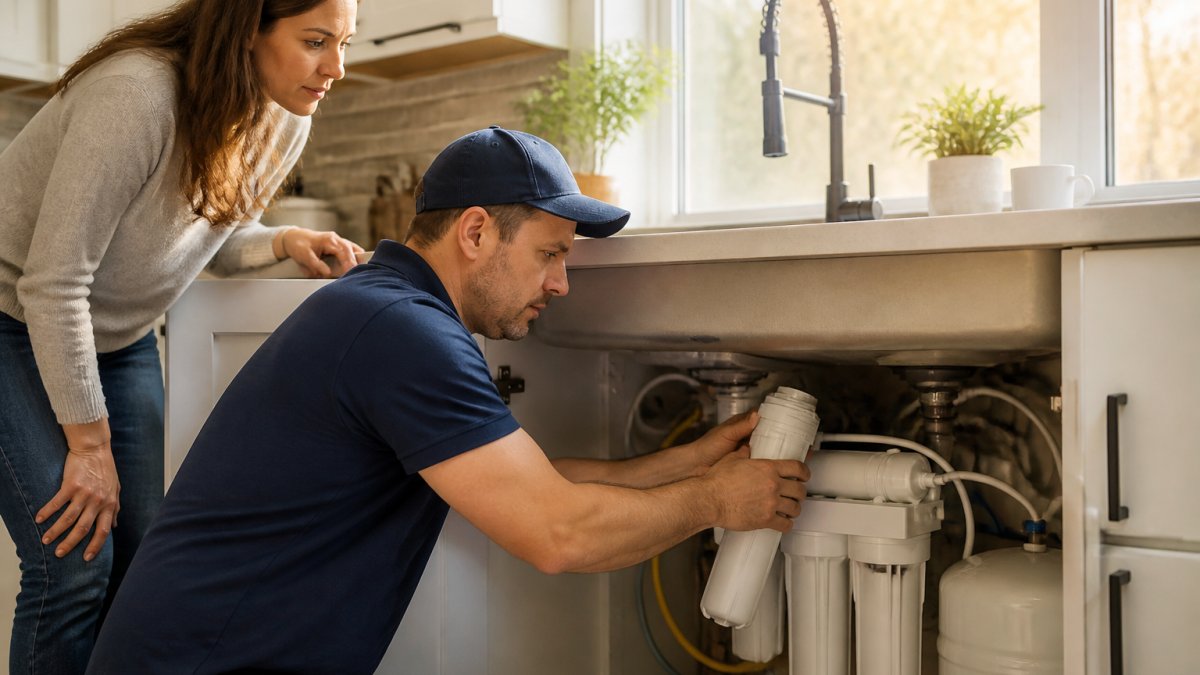
RO systems install under the sink or in a basement, connect to your cold-water line, and feed a dedicated faucet or your refrigerator.
How Whole-Home Filtration Works
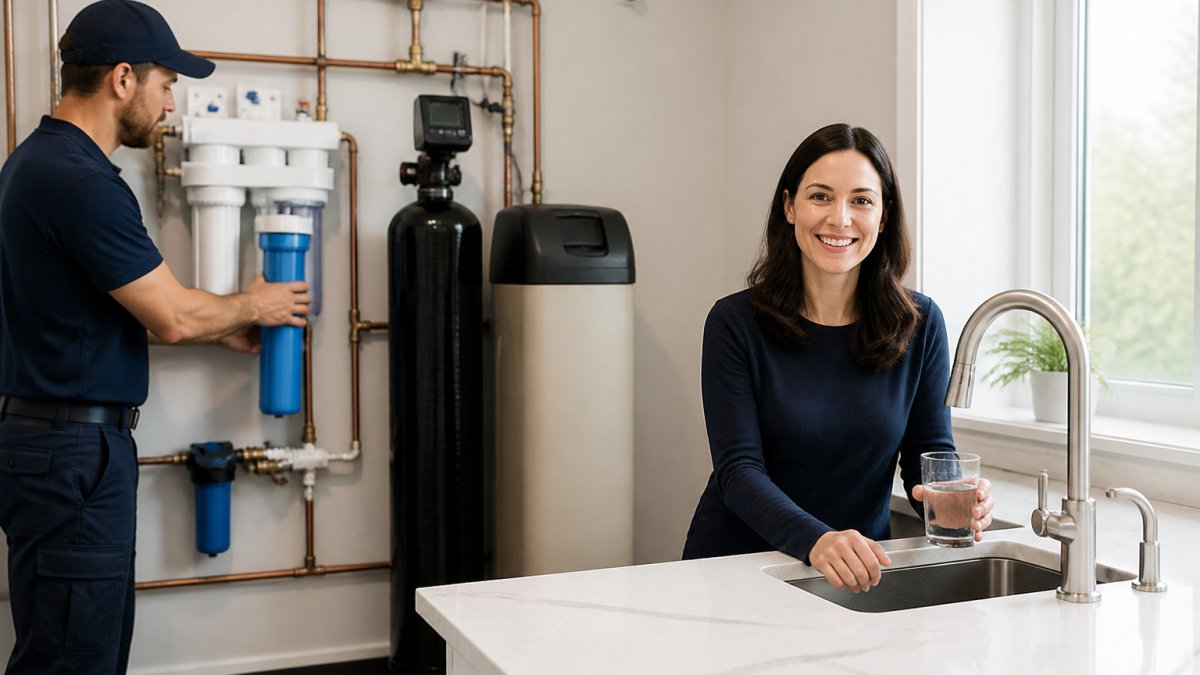
Whole-home filtration systems are installed at the main water line entering your home, filtering all water before it reaches any tap, shower, or appliance.
Activated carbon, the most common media, absorbs chlorine and chloramine, improves taste and odour, and reduces some organic compounds.
Most whole-home filters need no electricity and produce no reject water, and pressure stays consistent throughout your home.
What Each System Removes: Contaminant Comparison
Reverse osmosis and whole-home filtration address different contaminant profiles, and the difference matters most when matching a system to a water test result. Performance depends on the system, its components, and whether it holds independent certification for the claims on the box.
What reverse osmosis is good at
A reverse osmosis membrane is a physical barrier that rejects dissolved solids and many dissolved contaminants while allowing water molecules through. A typical under-sink RO system with sediment and carbon pre-filters reduces:
- Total dissolved solids (TDS), including sodium and mineral salts
- Heavy metals such as lead, cadmium, and mercury (performance varies by system and certification)
- Fluoride
RO is not a disinfectant. It can reduce bacteria and viruses when the membrane is intact and maintained, but it is no substitute for UV disinfection or chlorination where microbiological safety is the concern, particularly on private well water. If your test shows bacteria, the fix is disinfection, not an RO membrane.
What whole-home filtration is good at
Whole-home systems are point-of-entry treatment, typically combining sediment filtration with activated carbon or a specialized media to address water everywhere in the house:
- Chlorine and chloramine (activated carbon is the standard media for this)
- Sediment, sand, silt, and rust (sediment stage)
- Taste and odour
What carbon filtration does not do is remove dissolved solids. It won't lower TDS, soften hard water, or reliably remove nitrate or fluoride. If your test shows high hardness or TDS, you need a softener, an RO system, or both.
A practical comparison
| Contaminant / issue | Sediment filter | Activated carbon | Reverse osmosis | UV disinfection |
|---|---|---|---|---|
| Sand, silt, rust | Yes | Partial | Yes (pre-filter) | No |
| Chlorine / chloramine | No | Yes | Yes (pre-filter) | No |
| Taste and odour | No | Yes | Yes | No |
| Hardness minerals | No | No | Yes (at the tap) | No |
| Lead and heavy metals | No | Partial | Yes | No |
| Nitrate, fluoride | No | No | Yes | No |
| Bacteria and viruses | No | No | Partial, not a disinfectant | Yes |
This table is a general guide, not a guarantee. Actual removal depends on the system, media, contact time, and certification.
How to verify what a system actually removes
Manufacturers make broad claims, so check the specifics:
- Look for a certification mark on the product or its performance data sheet. In Canada, look for certification from an accredited body such as NSF International or the Water Quality Association (WQA), and confirm it covers the specific contaminant claim, not just a general "tested to standard" statement.
- Match the certification to your concern. A system certified for chlorine reduction is not automatically certified for lead or nitrate reduction.
- Ask for the performance data sheet and read the tested conditions; feed-water quality, flow rate, and capacity all affect real-world results.
- Test your own water first. A water test tells you which contaminants are actually present, so you are not paying for treatment you do not need.
At Pure Life H2O, we recommend a water test before any treatment recommendation, because the right system is matched to what's actually in your water. Get your free water test to understand your water quality and make an informed decision.
Installation: Point-of-Use vs Point-of-Entry
Where and how you install a system affects convenience, cost, and coverage.
Point-of-use (reverse osmosis): Installed at a single tap, usually under the kitchen sink, in a few hours without major plumbing work.
Some homeowners use both: a whole-home filter for chlorine and sediment across the house, plus an under-sink reverse osmosis system for premium drinking water.
Reverse Osmosis vs Whole House Water Filter for Your Household
The best choice depends on your specific needs and water quality.
Drinking Water Quality and Taste
If your priority is drinking and cooking water, reverse osmosis produces the highest-quality output, removing dissolved solids and delivering noticeably cleaner-tasting water.
Whole-home filtration improves taste by removing chlorine but doesn't reduce dissolved solids, so with high mineral content, it may not deliver the taste improvement you want.
For drinking water alone, an under-sink reverse osmosis system is typically the most practical and economical choice.
Whole-Home Water Quality for Bathing and Appliances
If you want to protect your entire home, appliances, fixtures, and even your skin and hair, whole-home filtration makes sense.
Whole-home carbon filtration removes chlorine throughout your home. If you also have hard water, add a water softener: the softener removes hardness minerals, the carbon filter removes chlorine, and together they address both issues.
Whole-house reverse osmosis systems exist but are expensive, produce significant wastewater, and reduce water pressure. They're rarely the practical choice for treating all household water.
Water Testing for Home Filtration Selection
Before you invest in any system, test your water. Testing tells you exactly what you're dealing with and prevents unnecessary purchases.
A water test measures:
- Hardness (calcium and magnesium)
- pH
- Chlorine and chloramine
If you have a private well, testing is essential: municipal water is tested regularly, but well water is your responsibility.
Pure Life H2O offers free water testing to help you understand your water quality and recommend the right system.
Reverse Osmosis System Maintenance and Operating Costs
Most comparisons stop at the purchase price. The more useful question is what each system costs to own over several years, including replacement media, membrane changes, wastewater, and any pretreatment needed.
Reverse osmosis: what you replace and how often
An under-sink RO system has several consumable parts, and each has a different service life:
- Sediment pre-filter: typically every 6 to 12 months, depending on sediment load
- Carbon pre-filter(s): typically every 6 to 12 months; protects the membrane from chlorine damage
- RO membrane: typically every 2 to 3 years, depending on feed-water quality and volume used
If you skip pre-filter changes, chlorine reaches and degrades the membrane, and output and water quality drop. That's why pre-filters, not the membrane, most affect long-term reliability.
Whole-home filtration: what you replace and how often
Whole-home systems have fewer consumables but larger ones:
- Sediment cartridge or backwashing media: interval depends on sediment load and flow rate
- Activated carbon cartridge or tank media: typically every 6 to 12 months for cartridges; tank-based carbon media lasts longer but is a larger service event
- Backwashing valves and controls: occasional service, not a routine consumable
Most whole-home carbon systems use no electricity, so energy cost is minimal. The main ongoing cost is media replacement, and the interval depends heavily on how much chlorine and sediment your water carries.
The water-waste question
RO systems produce reject water, the stream carrying rejected contaminants to the drain. The reject-to-purified ratio varies widely by system design, feed-water temperature, pressure, and TDS. Older or basic systems waste more; those with a permeate pump or improved recovery design waste less.
Practical ways to reduce waste:
- Choose a system with a higher recovery rate and a permeate pump where appropriate
- Avoid running the system for very small draws; use the storage tank
- Where local rules and plumbing allow, some homeowners route reject water to a rain barrel or use it for non-potable tasks like flushing or irrigation; check with a professional before modifying drain lines
Whole-home carbon filtration produces no reject water, which is one reason it is often the lower-waste choice for whole-house treatment.
Pretreatment: the hidden cost driver
RO membranes are sensitive to certain feed-water conditions. Very hard water, high iron or manganese, or sediment can foul the membrane quickly unless the water is pretreated.
A common pattern is a whole-home softener or iron filter upstream of an under-sink RO system, protecting the membrane and extending its life, often more economical over time than frequent membrane replacement.
A maintenance summary
| System type | Routine replacement | Typical interval | Other considerations |
|---|---|---|---|
| Reverse osmosis | Sediment and carbon pre-filters; post-carbon filter | 6-12 months | Membrane every 2-3 years; reject water; pretreatment may be needed |
| Reverse osmosis | RO membrane | 2-3 years | Protect from chlorine and fouling |
| Whole-home carbon filtration | Carbon and sediment media or cartridges | 6-12 months (cartridges); longer for tank media | No reject water; minimal energy use |
Intervals are general guidance. Your actual schedule depends on water quality, household size, and usage, which is why a water test and professional assessment are the starting point, not an afterthought.
Reverse Osmosis vs Water Softener: When to Use Each
Water softeners and reverse osmosis systems solve different problems, and they're often confused.
A water softener removes hardness minerals (calcium and magnesium) through ion exchange, preventing scale buildup on fixtures and appliances and making soap more effective.
Reverse osmosis removes dissolved solids, including hardness minerals, plus many other contaminants, improving taste and drinking water quality.
If limescale and appliance damage are the main issue, a water softener is the direct solution.
Can You Use Both Systems Together?
Yes, and in many cases, it's the most practical solution.
A common setup is:
- Whole-home water softener to remove hardness and protect appliances
- Under-sink reverse osmosis system for premium drinking water
The softener treats all water entering your home.
Another option is whole-home carbon filtration plus reverse osmosis.
The right combination depends on your water test results and priorities.
Hard water and chlorine taste are common issues, and they have straightforward solutions.
Pure Life H2O specializes in customized water treatment plans based on your water test results. We're an authorized Pentair dealer with over 26 years of experience installing and maintaining water softeners, whole-home carbon filtration, reverse osmosis systems, and complete treatment solutions. Get your free water test to find out exactly what's in your water and which system will work best for your home.
Frequently Asked Questions
What is the main difference between reverse osmosis and whole-home filtration?
Reverse osmosis is a point-of-use system that treats water at one tap, typically under the sink for drinking water. It forces water through a semi-permeable membrane to remove dissolved solids, salts, and many contaminants. Whole-home filtration treats water at the entry point before it reaches any tap in your house, protecting all fixtures and appliances. Whole-home systems typically use activated carbon, sediment filters, or specialized media rather than RO membranes.
Can a whole-home water filter remove the same contaminants as reverse osmosis?
Whole-home filters can remove many contaminants, including sediment, chlorine, taste and odour, and some chemicals through activated carbon. However, reverse osmosis removes a broader range of dissolved solids and salts that carbon filters cannot capture. The contaminants each removes depend on the specific media and technology used. Water testing identifies which contaminants are present in your water so you can choose the right system.
Should I install reverse osmosis and a whole-home filter together?
Many homeowners benefit from combining both systems. A whole-home filter protects all fixtures and appliances from sediment and chlorine, extending the life of your plumbing. A reverse osmosis system then provides premium drinking water at the kitchen tap. This combination addresses water quality for the entire house while delivering high-purity water where you drink and cook. A water test will show whether both systems make sense for your household.
How do I know which system is right for my home?
Start with a water test to identify what contaminants and minerals are in your water. If you have hard water and mineral buildup on fixtures, a whole-home filter or softener may be your priority. If you want better drinking water taste and purity, reverse osmosis is ideal. If you have concerns about both whole-house quality and drinking water, combining systems often works best. Pure Life H2O offers free water testing to help you understand your specific needs.