 how-to
Treating Iron and Sulfur in Well Water: A How-To Guide
Last Updated: November 1, 2026
Quick Summary
To treat iron and sulfur in well water, first get a lab test to measure each substance and your pH and flow rate. Then match the system to the results: oxidizing filters for iron, and air injection for rotten-egg sulfur. Many homes need a combined system.
- Get a lab test before choosing a system, since staining and smell cannot show exact levels.
- Ask the lab to report iron in mg/L and note whether it is total or dissolved iron.
- Sample sulfur first, filling the container to the brim to limit air contact.
- Size the system to peak flow in gallons per minute, not average household use.
- Iron bacteria may need shock-chlorination of the well and plumbing, then retesting.
Table of Contents
- Why Iron and Sulfur Show Up in Well Water
- Recognizing the Signs: Staining, Metallic Taste and Rotten-Egg Odour
- Step 1: Get a Proper Well Water Test for Iron and Sulfur
- Step 2: Choose a Treatment Method Based on Your Results
- How to Remove Iron from Well Water
- How to Get Sulfur Out of Well Water
- Dealing with Iron Bacteria in Well Water
- Maintenance, Backwashing and Troubleshooting
- Frequently Asked Questions
This guide walks you through the process of dealing with iron and sulfur in well water, in order. If your water is stained orange, tastes metallic, or smells like rotten eggs, you can usually fix it with the right treatment. The first step is knowing exactly what is in your water, because the test results decide which system you need.
Why Iron and Sulfur Show Up in Well Water
Private wells draw water from groundwater, and that water picks up minerals as it moves through rock and soil. Iron is one of the most common of these minerals. Sulfur usually reaches well water as hydrogen sulfide gas, or from bacteria that feed on sulfur in the ground.
Neither one is a sign that your well is broken. They are a normal part of groundwater chemistry, and they vary from one property to the next.
Recognizing the Signs: Staining, Metallic Taste and Rotten-Egg Odour
Each problem leaves its own clues.
- Iron: Orange or rust-coloured stains on sinks, tubs and laundry, plus a metallic taste.
- Sulfur: A rotten-egg smell, most noticeable in hot water.
- Iron bacteria: Slimy red or brown deposits in toilet tanks and a musty odour.
Staining and odour are useful clues, but they do not tell you the exact levels. Only a lab test can do that. Guessing from the smell or colour can lead you to buy the wrong system. This rotten-egg odour guide explains the causes and the treatments that address them.
Step 1: Get a Proper Well Water Test for Iron and Sulfur
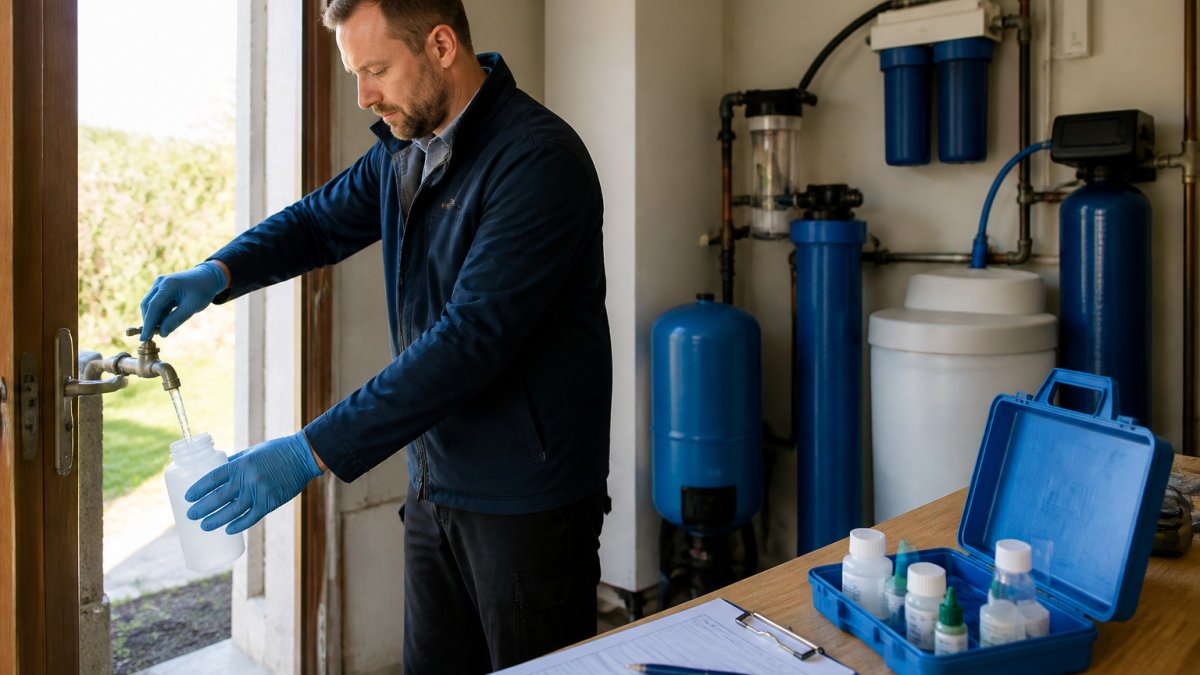
Testing comes first, every time, but "get a test" is not specific enough to be useful. What you order, how you collect the sample, and where it is analyzed all change the numbers you get back, and those numbers decide which system you need. This section gives you a testing and diagnosis workflow you can follow in order.
What to test for
Ask for a report that covers, at minimum:
- Iron, request both total iron and dissolved (ferrous) iron if the lab offers it, since the split tells you how much is already oxidized.
- Sulfur / hydrogen sulfide, measured at the well or as close to it as possible, because the gas dissipates once water is exposed to air.
- pH and alkalinity, oxidation media and air systems behave differently across the pH scale.
How to collect a sample that gives a true reading
Iron and sulfur are the two parameters most easily skewed by poor sampling.
- Draw the sulfur sample first, fill the container to the brim to minimize air contact, and cap it immediately.
- For iron, follow the lab's instructions on whether to acid-preserve the sample; an unpreserved sample can let dissolved iron oxidize and settle before analysis.
- Do not run the water for a long time before sampling if you want a true well reading, a long flush samples the plumbing, not the aquifer.
- Label each container with the date, time and tap used, and keep the report with your well records.
When to use a certified laboratory
For bacteria results you intend to act on, or that a lender, insurer or public health unit may ask about, use an accredited laboratory rather than a home test strip. Home strips are useful for a rough screen of pH and hardness but are not a substitute for a lab result on iron, sulfur or bacteria. If you are unsure which tests to order, a water treatment provider can help you select a panel that matches your symptoms and your well.
Turn the report into a diagnosis
Once results are in hand, work through them in this order:
- Confirm the form of iron, dissolved versus already oxidized, because it changes whether you need oxidation, filtration, or both.
- Separate gas from bacteria, a sulfur odor with no measurable sulfide points toward sulfur bacteria rather than dissolved gas.
- Check pH before choosing media, acidic water may need correction first.
- Note the flow rate your pump delivers at peak demand, so the system can be sized correctly.
- Flag anything that is not iron or sulfur, manganese, nitrate, bacteria or hardness, because those may need their own treatment step.
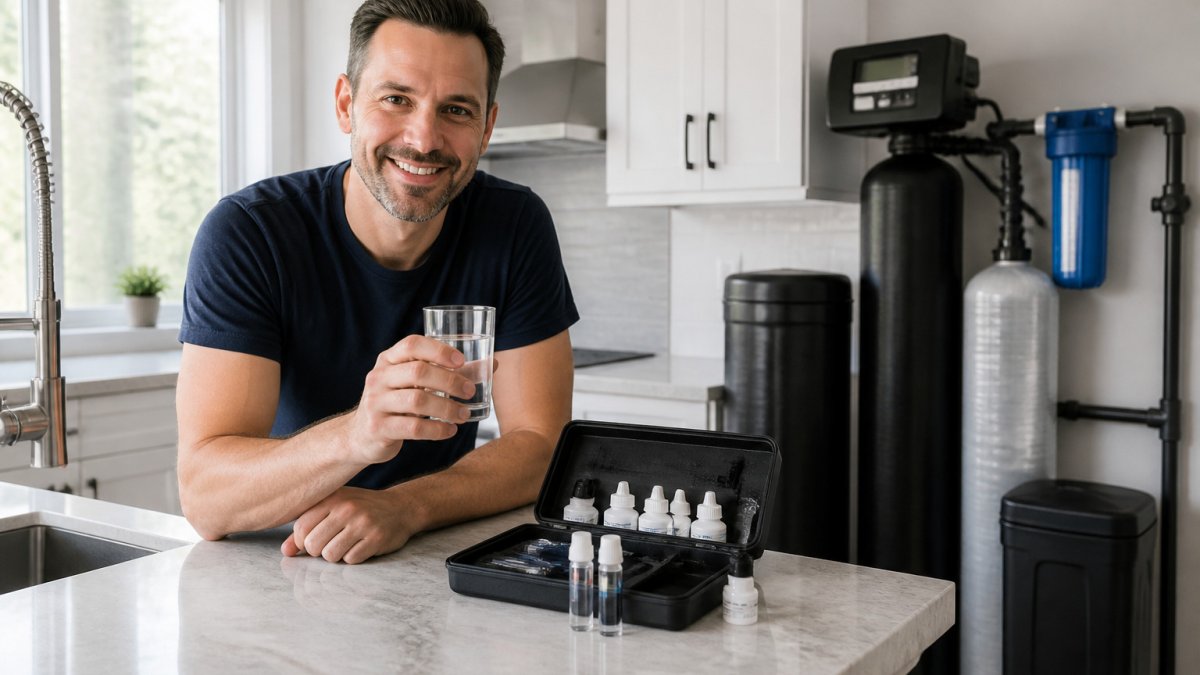
If you want a clear picture of what is in your well, you can GET YOUR FREE WATER TEST with Pure Life H2O.
Step 2: Choose a Treatment Method Based on Your Results
A test report is only useful if you can read it. The goal of this step is to translate three numbers, iron concentration, sulfur concentration, and pH, plus your peak flow rate into a shortlist of treatment types. Most homeowners who buy the wrong system skipped this translation and matched a filter to a smell instead of a measurement.
Read the report in this order
- Iron, in mg/L (ppm). Note whether the lab reports total iron or dissolved (ferrous) iron. If iron is high but the sample was clear when drawn, much of it may be dissolved and treatable by oxidation plus filtration. If the sample was cloudy or left rust particles, some iron is already oxidized (ferric) and needs physical filtration first.
- Sulfur / hydrogen sulfide, in mg/L. A rotten-egg odor with no measurable sulfide can still indicate sulfur bacteria rather than dissolved gas, those are different problems with different fixes.
- pH. Oxidation media and air systems perform differently across the pH scale. Acidic water (low pH) often needs pH correction before or alongside iron and sulfur treatment, or the media will underperform.
- Flow rate, in gallons per minute (gpm). Size the system to your peak household demand, not your average. A filter rated for a lower flow than your pump delivers at peak use will pass untreated water through during morning showers.
- Bacteria and other contaminants. Iron and sulfur treatment does not make water microbiologically safe. If the lab flags coliforms or you have iron bacteria, disinfection is a separate step (see the iron bacteria section below).
Match the treatment type to the pattern
Use this as a starting framework, not a prescription, final sizing depends on your full report and plumbing.
| What the report shows | Treatment direction to discuss |
|---|---|
| Low-to-moderate dissolved iron, near-neutral pH | Oxidation plus backwashing filter, or air-injection system |
| Iron with noticeable rotten-egg odor | Combined oxidation/air system sized for both, since one unit often handles both |
| High or variable sulfur, strong odor at the tap | Air injection to strip gas first, with filtration for residual |
| Visible rust particles or cloudy sample | Sediment filtration ahead of the iron filter to protect media |
| Iron bacteria, slime, musty odor | Well and plumbing disinfection first, then ongoing iron/bacteria control |
| Acidic water with iron | pH correction before or with iron treatment |
| Low flow at peak demand | Right-size the unit or add storage; do not oversize the media bed |
Chemical-free versus chemical-assisted options
- Chemical-free (air injection, oxidizing media): No chemical feed to store or replenish, but air valves and media need routine service, and performance depends on pH and flow.
- Chemical-assisted (oxidizing feed such as chlorine or hydrogen peroxide ahead of a filter): Handles heavier or more variable loads and can help with bacteria, but adds a feed system to maintain and may require carbon polishing to remove residual taste and odor.
Neither approach is universally better. The right choice follows from your measured concentrations, pH and flow, which is why the test comes before the quote. If you have not tested yet, start with a GET YOUR FREE WATER TEST so the recommendation is built on numbers rather than guesswork.
How to Remove Iron from Well Water
Iron removal works best when the system oxidizes the iron before it reaches the filter. Once it is oxidized, the particles can be caught and flushed out during backwash. You can compare the main iron and sulphur system options for Ontario well water in one place.
- Pros: Stops staining, removes metallic taste, protects fixtures
- Cons: Requires a backwash cycle and periodic media care
Iron levels that are high or mixed with sulfur usually call for a combined system rather than a basic filter.
How to Get Sulfur Out of Well Water
Hydrogen sulfide is removed by aeration, oxidation or a specialty filter, depending on the concentration. Air injection is often the first choice because it removes the gas before it reaches the rest of your plumbing. For a guide to iron and sulphur filter options for Ontario homeowners, see the options side by side.
- Pros: Eliminates rotten-egg smell, works without chemicals
- Cons: Air systems need routine checks, and very high sulfur levels may need additional treatment
Dealing with Iron Bacteria in Well Water
Iron bacteria are not a health hazard in most cases, but they cause slime, staining and clogged plumbing. They grow in the well, the pipes and the toilet tank.
If you suspect iron bacteria, a professional can shock-chlorinate the well and plumbing, then retest the water. Ongoing treatment usually needs a system that handles both iron and bacterial growth.
Maintenance, Backwashing and Troubleshooting
Good maintenance keeps your system working for years. Most iron and sulfur filters backwash automatically, but you still need to check them.
- Check the media on the schedule the manufacturer recommends.
- Confirm that the backwash cycle runs and drains properly.
- Replace filter media before it stops trapping particles.
- Retest your water each year, or sooner if the taste or smell changes.
If the odour returns between service visits, check the air valve, the media level and the backwash timer first.
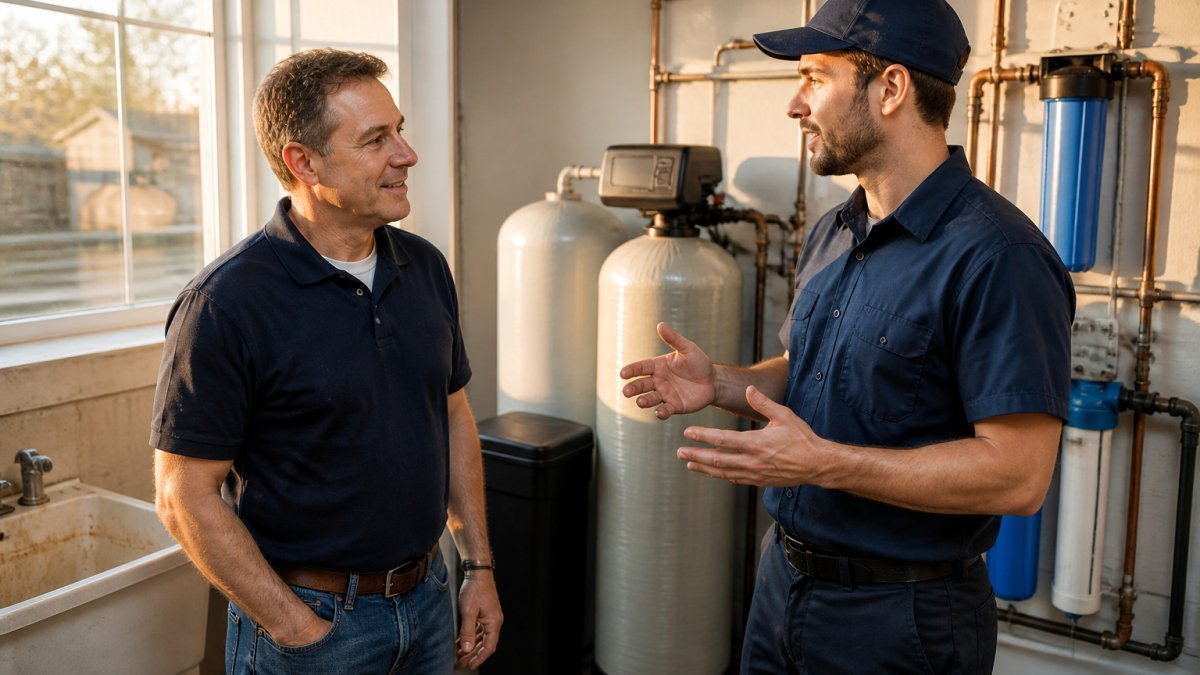
Pure Life H2O provides professional installation, maintenance, and troubleshooting for Ontario homeowners across the Greater Toronto Area who want support with their water treatment systems.
Frequently Asked Questions
How do you get sulfur out of well water?
Hydrogen sulfide, the gas behind rotten-egg odour, is usually removed with an oxidizing filter, most often one using air injection over a media bed, sometimes followed by activated carbon for polishing. Oxidation converts the dissolved gas into solid sulfur that the filter traps and flushes out during backwashing. Because the right method depends on the measured sulfur level, pH and flow rate, a water test should come first. Pure Life H2O can test your water and recommend a system sized for your household.
Is it safe to shower in well water that smells like rotten eggs?
The odour itself is mainly a nuisance, but it signals that hydrogen sulfide is present, and a water test is the only way to know what else is in your supply. Showering in water with a sulfur smell is generally not considered a serious hazard for healthy adults, though ventilation helps. Anyone with concerns about bacteria or other contaminants should have the water tested by a certified laboratory and consult their healthcare provider or local public health unit.
What tests should I get before treating iron and sulfur in well water?
Start with a test that measures iron and sulfide levels, pH, hardness and bacteria, because each one affects the treatment choice. Iron and sulfur can be tested on site, but a certified laboratory gives more reliable results for bacteria and other contaminants. Ask whether the lab can distinguish between dissolved and particulate iron, since that changes which filter will work. Pure Life H2O offers a free water test to help you plan.
Pure Life H2O can test your well, explain your options, and recommend a system that fits your water and your household. Book Your Free Water Test & Consultation and get clear answers about your iron and sulfur problem.