 How-to
How to Identify Lead in Pipes at Home
Last Updated: November 19, 2026
Quick Summary
To identify lead in pipes at home, start with a visual check of your water service line where it enters the house, looking for dull grey, soft metal and swollen, lumpy joints. A magnet test helps rule out steel, but only a lab water test confirms how much lead is in your drinking water.
- Lead does not change how water looks, smells or tastes, so you cannot detect it by senses.
- Lead is dull grey and soft enough that a fingernail can leave a mark.
- A magnet will not stick to lead, but it also will not stick to copper.
- Lead concentrations are highest in water that has sat in the pipes overnight.
- Do not scrape, cut or heat a suspected lead pipe; leave invasive testing to a professional.
Table of Contents
- Why Lead in Pipes Matters for Your Drinking Water
- Locating Your Water Service Line
- Step-by-Step Visual Inspection of Your Pipes
- How to Use a Magnet to Identify Lead Pipes
- Comparing Lead, Copper, Galvanized Steel and PEX
- Water Testing for Lead: When and How to Do It
- Reverse Osmosis for Lead Removal and Next Steps for Your Home
- Frequently Asked Questions
Why Lead in Pipes Matters for Your Drinking Water
Lead in pipes is one of the most serious risks in an older Canadian home, and it is also one of the easiest to check for. Lead gets into tap water when it leaches from plumbing materials, especially water that sits in pipes overnight.
Here is the core idea: find out what your service line and plumbing are made of, then decide whether testing and treatment are needed. A water test before any treatment decision is the most reliable way to find out what is actually in your water. Once the source of lead is understood, water testing for treatment systems can help determine which treatment approach fits the water’s specific needs.
- Lead does not change how water looks, smells or tastes.
- Water that sits in the pipes overnight tends to carry the most lead.
- Identifying the pipe material is the first step, not the final answer.
Locating Your Water Service Line
Your water service line is the pipe that carries water from the municipal main in the street to your home. In many older Ontario homes, this line may be made of lead or galvanized steel. Finding it is the first physical step in any inspection.
Start by checking where the line enters the house, usually in the basement, a crawl space or near the water meter. Your municipality may also keep records of service line materials, so ask before you start digging or cutting into anything.
Look for these common entry points:
- The water meter, often in a basement or utility room
- The main shutoff valve, usually close to where the line enters
- A pipe running from the foundation wall toward the street
Step-by-Step Visual Inspection of Your Pipes
A visual check is quick and free, and it tells you where to look more closely. It will not confirm lead on its own. Work in good light, keep a rag and a flashlight handy, and do not cut, scrape, or heat anything until you know what you are dealing with.
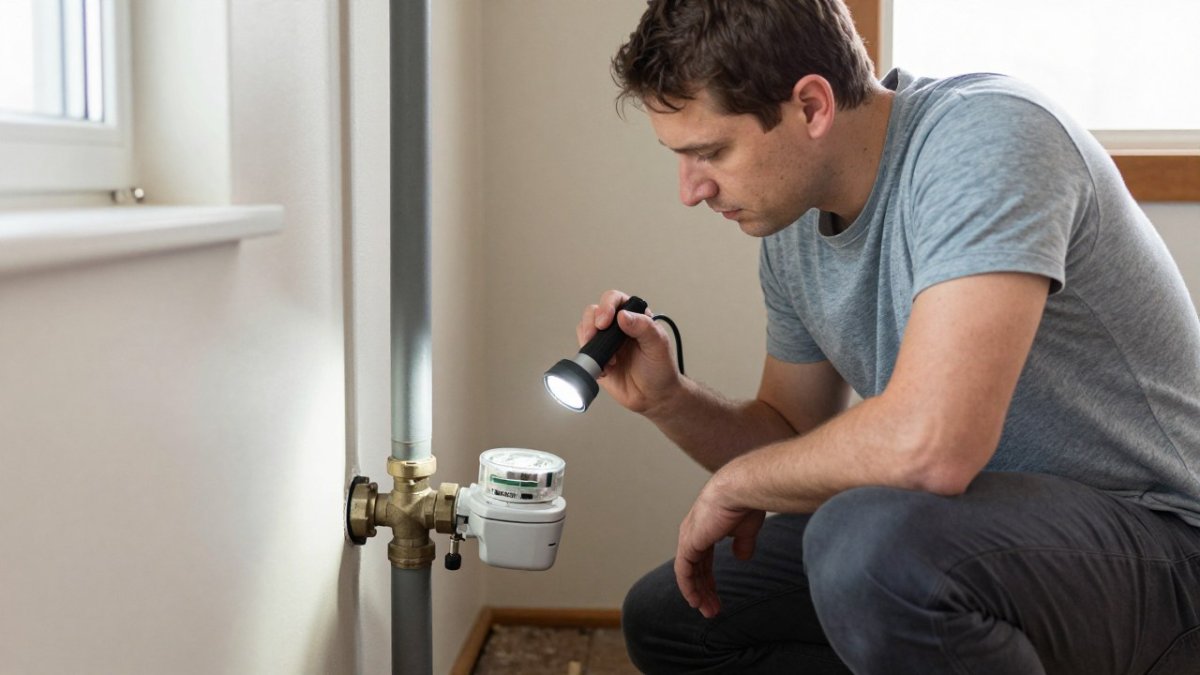
Follow these steps in order:
- Find the point where the water line enters your home, usually through the foundation wall in the basement or crawl space.
- Trace the pipe from the entry point to the water meter and the main shutoff valve.
- Note the pipe material, colour, surface texture, and the shape of every joint you can see.
- Look for corrosion, scaling, green or white buildup, or soft metal that dents under a fingernail.
- Photograph each section with something for scale, and note the location so a professional can follow your record.
Visual Characteristics of Lead Pipes
Lead service lines have a few recognizable traits. The metal is dull grey and soft enough that a fingernail can leave a mark. A fresh scratch reveals a shiny, silvery surface that dulls again within minutes as it oxidizes. Lead bends easily and feels heavy for its size. Where the pipe meets a fitting, the joint often looks lumpy rather than clean and machined.
Compare that with the other common materials. Copper is reddish-brown and turns green where it corrodes. Galvanized steel is dull grey but usually rougher and scaly, and it rusts rather than denting. PEX is flexible plastic, typically white, red, or blue, and has no metal at all.
Swollen Joints and Bulbous Connections
Older lead service lines often have joints that look swollen or bulbous where sections meet. These lumps are wiped solder joints, a technique used when lead lines were installed, and they are a useful clue. Their presence does not prove lead on its own, because similar joints appear on some old galvanized work, but they justify a closer look and a water test.
Watch out: do not scrape, cut, or heat a suspected lead pipe to test it. Disturbing lead can release dust and fumes, and a scratched surface is harder for a professional to assess. Leave any invasive testing to a trained plumber or the utility.
DIY or Professional Inspection: A Quick Decision Guide
Most homeowners can safely do the visual pass and the magnet check described below. Hire a licensed plumber or call the utility when any of these apply:
- The pipe is painted, insulated, or buried behind a finished wall.
- You cannot tell lead from galvanized steel after the visual and magnet checks.
- The service line runs under a driveway, deck, or landscaping you do not want disturbed.
- You are buying the home and need a documented answer for the transaction.
- You have already found lead and need a replacement plan.
A plumber can confirm material on site and, where needed, arrange a lab sample. The utility can confirm what it owns and what you own, which matters because responsibility for the service line is often split at the property line or the meter.
How to Use a Magnet to Identify Lead Pipes
A magnet test is a simple way to rule materials in or out. Lead is not magnetic, so a magnet will not stick to it. Steel and galvanized steel are magnetic, so a magnet will stick to them. This gives you a quick way to separate steel from non-magnetic metals.
Use a strong refrigerator-style magnet on a clean part of the pipe. If the magnet holds firmly, the pipe is likely steel or galvanized steel. If it does not stick, the pipe may be lead, copper or plastic, so you will need more checks.
A magnet cannot tell lead from copper. Use it only to narrow the options, then confirm with a professional.
Comparing Lead, Copper, Galvanized Steel and PEX
Different pipe materials behave very differently in a home. Knowing what each one looks like and how it reacts helps you decide what to check next.
| Material | Appearance | Magnet Test | Common Concern |
|---|---|---|---|
| Lead | Dull grey, soft, bulbous joints | Does not stick | Leaches lead into water |
| Copper | Reddish-brown, shiny when new | Does not stick | Can corrode in some water |
| Galvanized steel | Dull grey, often rough or scaly | Sticks firmly | Corrosion and rust buildup |
| PEX | Flexible, usually white, red or blue | Does not stick | Generally low lead risk |
Copper and PEX are generally safer choices than lead or old galvanized steel. Even so, water quality can affect every material, so testing still matters.
Water Testing for Lead: When and How to Do It
Water testing is the only way to know how much lead is in your drinking water. A visual check or magnet test can point you in the right direction, but only a lab analysis measures what you are actually drinking. Test if your home was built before the mid-1980s, if you have lead or galvanized service lines, if you are on a private well, or if you notice a change in water taste or clarity.
How to Collect a First-Draw Sample
Lead concentrations are highest in water that has sat in the pipes. The standard approach is a first-draw sample: fill a clean bottle first thing in the morning, before any tap has run, from the kitchen cold tap.
A common pattern is to take two samples: a first-draw sample that reflects overnight sitting water, and a flushed sample taken after the tap runs for a couple of minutes. The difference between them tells you whether lead is coming from your own plumbing or from the service line, which shapes the fix.
Choosing a Lab and Reading the Result
Use an accredited laboratory that reports lead in micrograms per litre. Health Canada publishes a guideline for lead in drinking water, and your local public health unit can explain what a result means for your household (Guidelines for Canadian Drinking Water Quality: Guideline Technical Document - Lead).
Pure Life H2O offers a GET YOUR FREE WATER TEST option, and you can also check whether free in-home water testing is available to you. Local options are listed in Where Can I Get Free In-Home Water Testing in the GTA?.
From Result to Decision: A Mitigation Roadmap
Most guides stop at identification. The useful next step is a plan, and it usually follows this order:
- Flush before drinking. Run the cold tap for a couple of minutes if water has sat overnight, and never use hot tap water for formula or cooking.
- Confirm the source. Compare first-draw and flushed results, and ask the utility whether the municipal portion of the service line contains lead.
- Treat at the tap in the short term. A point-of-use reverse osmosis system or a certified lead-reduction filter can lower lead in drinking water while a permanent fix is arranged.
- Plan replacement. Partial replacement of only your side of the line can temporarily increase lead release, so coordinate with the utility and use a licensed plumber.
- Retest after any change. A follow-up sample confirms the fix is working.
Review the results with a water treatment professional before buying equipment. Compare lead-appropriate filter options for Canadian homes, and learn more about reverse osmosis systems and how they work. Book a water test to start with facts, not guesses.
Reverse Osmosis for Lead Removal and Next Steps for Your Home
Reverse osmosis is a filtration method that pushes water through a very fine membrane, which can reduce lead at the tap.
Once your test results are in, take these steps:
- Review the results with a water treatment professional.
- Compare lead-appropriate filter options for Canadian homes.
- Learn more about reverse osmosis systems and how they work.
- Plan for replacement of any lead pipes, since filtering is a short-term fix.
Pure Life H2O offers water testing and treatment consultations for Ontario homeowners. Book your water test to start with facts, not guesses.
Frequently Asked Questions
Does boiling water remove lead? No. Boiling does not remove lead and can make it more concentrated as water evaporates.
Is a reverse osmosis system enough to remove lead? A properly maintained reverse osmosis system can reduce lead at the tap.
Can I replace lead pipes myself? Replacing a service line is a job for licensed professionals, because disturbing lead can release dust and fumes.
Frequently Asked Questions
What do lead water pipes look like?
Lead pipes are typically dull grey and soft enough to be scratched with a coin, leaving a shiny silver mark. They often look dull rather than shiny, and the surface may show a whitish or greyish oxidation layer. Lead pipes are also heavier and more flexible than copper. Visual clues alone are not conclusive, though, because galvanized steel can look similar. A magnet test and professional water testing help confirm what you have.
How can I tell if my service line is made of lead?
Start by checking whether your municipality has a service line inventory, since many utilities now publish these records. Next, inspect the pipe where it enters your home, usually in the basement or crawl space near the water meter. Look for a dull grey, soft pipe and check for swollen or bulbous joints. If you remain unsure, ask a licensed plumber or request a professional assessment before you rely on a single test.
Does a magnet stick to lead pipes?
No. Lead is not magnetic, so a magnet will not stick to a lead pipe. A magnet does stick to steel, including galvanized steel, which is why the test helps rule out steel but cannot confirm lead on its own. A magnet that does not stick means the pipe is more likely lead, copper or plastic, so you still need a visual check and a water test for lead to confirm the material.
How do I test my water for lead contamination?
A water test for lead is the only way to know how much lead is actually reaching your tap. Use a certified laboratory and follow its sampling instructions, which often call for a first-draw sample taken after the water has sat in the pipes overnight. Pure Life H2O offers a free water test to help homeowners in the Greater Toronto Area understand their results and the treatment options available.