 comparison
How to Choose a Water Filtration System for Your Home
Last Updated: November 2, 2026
Quick Summary
To choose a water filtration system, start with a water test rather than a product page, because the results tell you which contaminants you actually have. Match each stage to the problem it solves: carbon filtration for chlorine and taste, softening for hardness, reverse osmosis for drinking water at one faucet, and UV for bacteria.
- Filtration removes contaminants like chlorine and lead, while a softener removes hardness minerals that cause scale.
- Whole-home carbon filtration treats every tap but does not soften hard water or make well water microbiologically safe.
- Reverse osmosis is a point-of-use system under the kitchen sink that treats only one faucet and produces some wastewater.
- UV disinfection needs clear water, so sediment and iron are usually removed ahead of it.
- Compare total cost of ownership over several years, including equipment, installation, replacement parts, and servicing.
Table of Contents
- Start With Your Water Test, Not a Product
- Water filtration vs water softener
- Water Testing for Homes: The Step That Decides Everything
- Whole-Home Water Filtration System: What It Covers and What It Doesn't
- Reverse Osmosis Drinking Water System: Point-of-Use Explained
- Matching a Water Filtration System to Your Household
- Installation, Maintenance, and the Costs Owners Forget
- Book a Free In-Home Water Test Before You Buy
- Frequently Asked Questions
Start With Your Water Test, Not a Product
Most homeowners start a water filtration system search by browsing models. The right first step is a water test, because the test tells you which contaminants you actually have, and that answer decides everything else.
A water filtration system is a treatment setup that reduces specific contaminants in your water, and the correct choice depends on what is in the water, not on what a product page claims to remove.
Below, we walk through each system type, what it does and does not fix, and how to match one to your household.
Water filtration vs water softener
Filtration and softening solve different problems, and confusing them is the most common buying mistake we see. For a deeper side-by-side, see our comparison of reverse osmosis vs whole home filtration.
Hard water leaves white crust on shower heads, spots on glassware, and scale inside tankless water heaters. Softening addresses that. Chlorine taste and odour, sediment, or bacterial concerns call for filtration or disinfection instead.
Water Testing for Homes: The Step That Decides Everything
Water testing for homes is the process of measuring what is actually in your water so treatment can be matched to it. Without those results, you are guessing.
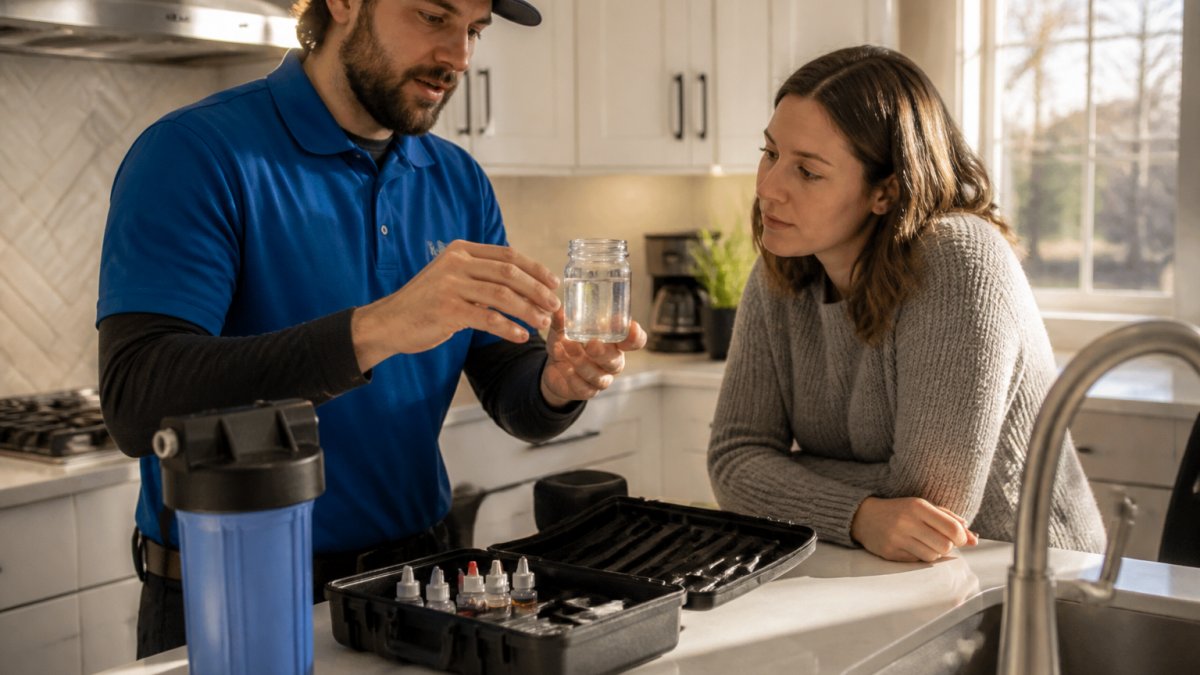
Municipal and well water need different attention. Ontario residents on private wells should test regularly, and Public Health Ontario's well water guidance explains what to check and how often. If you would rather have it done for you, you can GET YOUR FREE WATER TEST.
Whole-Home Water Filtration System: What It Covers and What It Doesn't
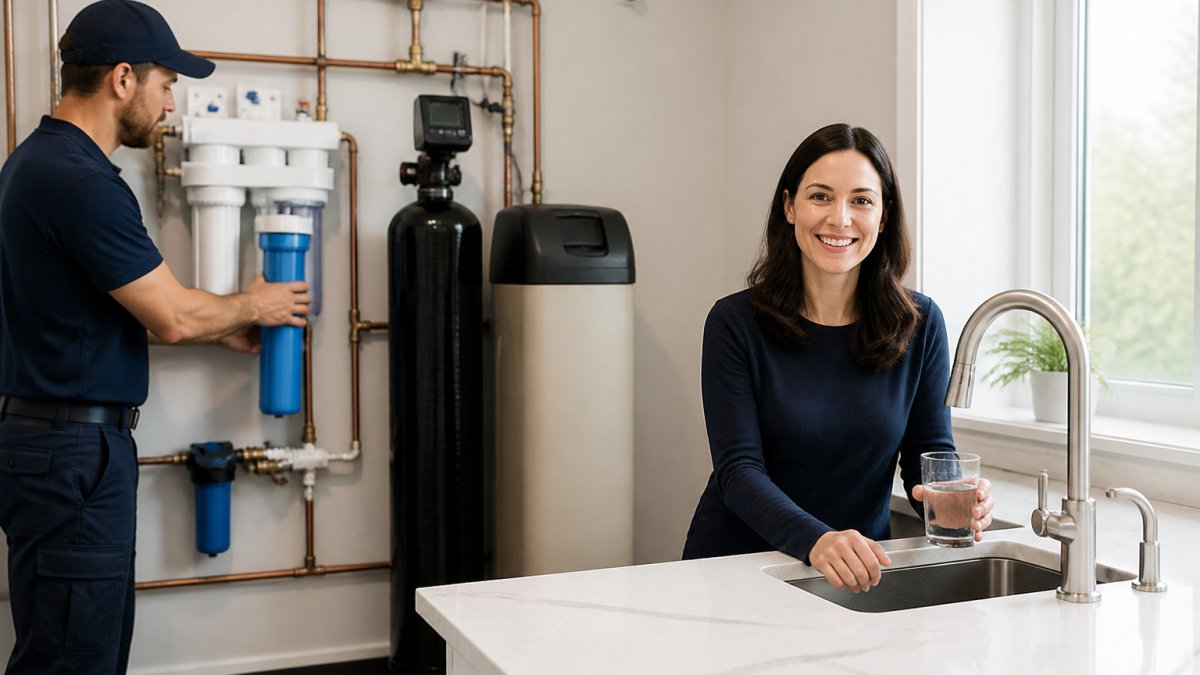
A whole-home water filtration system treats water at the point it enters the house, so every tap, shower, and appliance gets filtered water.
It does not soften hard water, and it does not make well water microbiologically safe on its own.
Watch out: buying a whole-home filter to fix hardness is a common and costly mismatch. Learn more about our whole-home water filtration options.
Reverse Osmosis Drinking Water System: Point-of-Use Explained
A reverse osmosis drinking water system is a point-of-use setup installed under the kitchen sink. You can review our reverse osmosis drinking water systems to evaluate a point-of-use option for your kitchen.
It is not a whole-home solution. An RO system treats only the water that passes through it, and it produces some wastewater as part of the process. For families focused on great-tasting drinking water, though, it is hard to beat.
Matching a Water Filtration System to Your Household
Choosing a water filtration system comes down to four inputs: your test results, your water source, your household size, and your goals. Most guides stop at a lookup table. A more useful approach is to compare every option on the same criteria, then apply a short decision framework so you are not comparing a whole-home carbon filter to an under-sink reverse osmosis unit as if they were interchangeable. Evaluating these trade-offs requires a clear understanding of the long-term benefits of filtration, which helps determine if the investment aligns with your specific household requirements.
A consistent comparison across system types
The table below compares the main options on the criteria that actually affect your decision: what the system treats, where it installs, what it does not fix, and what ongoing attention it needs. Use it to shortlist, then confirm with your test results.
System | Primary job | Where it installs | What it does not fix | Ongoing attention |
|---|---|---|---|---|
Whole-home carbon filtration | Reduces chlorine, chloramine, taste, and odour at every tap | At the main water line entering the home | Hardness, iron, sulphur, bacteria | Periodic carbon media or cartridge replacement |
Water softener | Removes hardness minerals (calcium, magnesium) that cause scale | At the main line, often ahead of other stages | Chlorine taste, bacteria, most dissolved contaminants | Salt refills and periodic regeneration checks |
Reverse osmosis (point-of-use) | Reduces dissolved solids, lead, and other contaminants at one faucet | Under the kitchen sink | Whole-home taste and odour, hardness, bacteria | Sediment and membrane replacement on a schedule |
UV disinfection | Inactivates bacteria and other microorganisms | After pre-treatment, typically on the main line | Chemical contaminants, hardness, taste and odour | Annual lamp replacement and quartz sleeve cleaning |
Iron and sulphur treatment | Removes iron staining and sulphur odour | At the main line, usually ahead of softening | Bacteria, dissolved solids, hardness | Media or chemical replenishment and backwash checks |
Two patterns stand out. First, no single row solves every problem, which is why many homes combine stages. Second, the systems that treat the whole house (carbon, softening, iron and sulphur, UV) are plumbed at the main line, while reverse osmosis serves one faucet.
A decision framework you can apply at home
Work through these questions in order. Each answer narrows the field before you look at any product.
- What is your water source? Municipal supply is treated but can still carry hardness and chlorine taste. A private well can bring iron, sulphur, and bacterial risk, which need their own stages.
- What did the test show? Match the system to the identified issue: hardness points to softening, chlorine taste to carbon filtration, iron staining and sulphur odour to dedicated treatment, bacteria to UV disinfection, and dissolved solids or lead at the tap to reverse osmosis.
- How many people, and where do you use water? A large household that showers, launders, and cooks with the same water usually benefits from whole-home stages, while a household focused on drinking water may prioritize a point-of-use system.
- What are your installation constraints? Main-line systems need space, proper plumbing, and correct sizing to keep water pressure steady. Under-sink systems need a feed line and a drain connection.
- What is your goal? Improving taste, reducing specific contaminants, and making water microbiologically safe are three different outcomes. Be clear about which one you are buying.
A household of five on hard municipal water with a taste complaint may need softening plus carbon filtration.
Watch out: buying a whole-home carbon filter to fix hardness is a common and costly mismatch. It will improve taste and chlorine while scale keeps building in your water heater.
Limitations and trade-offs to weigh before you buy
Every option carries trade-offs, and a neutral comparison should name them. Reverse osmosis produces some wastewater and serves only one faucet. Whole-home systems can affect flow rate and pressure if undersized. Softeners also remove some minerals along with hardness, and some homeowners prefer to keep a separate unsoftened drinking tap. UV disinfection needs clear water to work well, so sediment and iron are usually removed ahead of it.
Installation, Maintenance, and the Costs Owners Forget
Installation and upkeep matter as much as the equipment, and this is where most buying guides go quiet. A system that is undersized, poorly plumbed, or neglected will underperform no matter how good the specifications look on paper. The useful comparison is not the sticker price but the total cost of ownership over several years: purchase, installation, replacement parts, and servicing combined.
Installation considerations by system type
Whole-home and softening systems need proper plumbing and correct sizing to keep water pressure steady, and they need space at the main line. Point-of-use systems are simpler to install but still need a feed line and a drain connection. UV disinfection is typically placed after pre-treatment so the water reaching the lamp is clear. Iron and sulphur treatment usually sits ahead of softening so the softener is not fighting iron.
Maintenance schedules and what drives them
Filter and media lifespan varies with water quality and household usage, so confirm any schedule for your water. A general pattern looks like this:
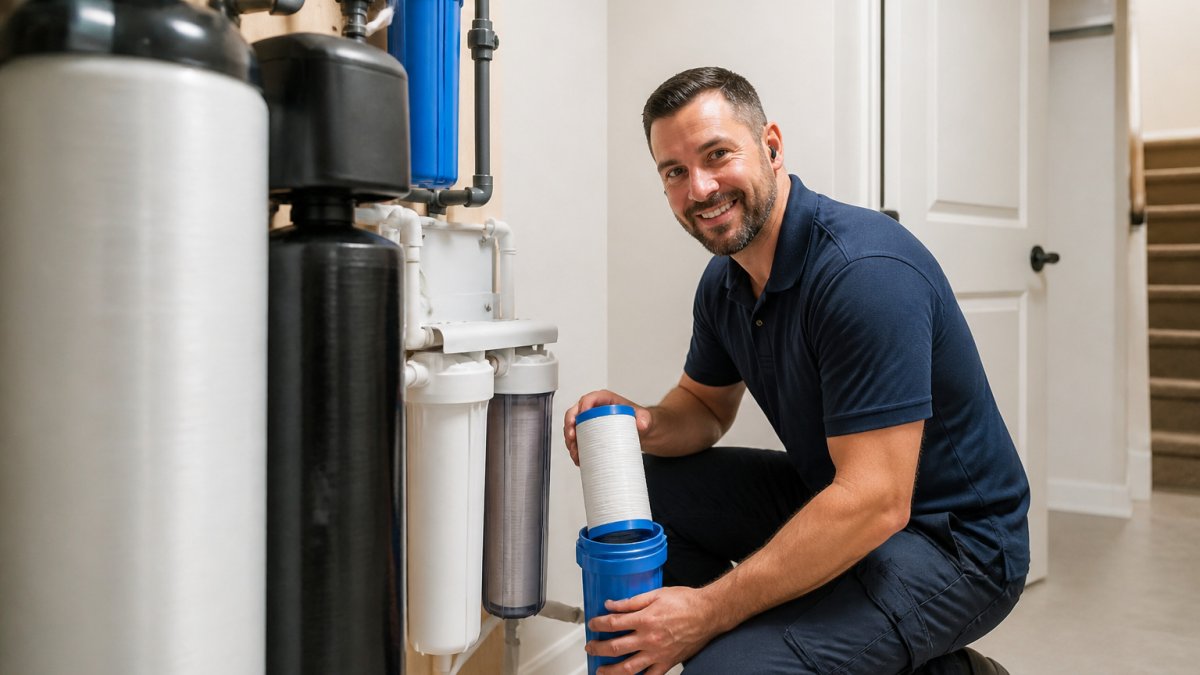
- Sediment and carbon cartridges: replaced periodically, more often in homes with higher sediment or chlorine levels.
- Reverse osmosis: sediment and carbon pre-filters changed on a regular interval, with the membrane replaced less often.
- Water softeners: salt refilled regularly, with periodic checks on regeneration and resin condition.
Ask about the replacement schedule before you buy, and budget for it as ongoing upkeep. The parts are the smaller line; the bigger variable is how hard your water works the system.
Building a total cost of ownership view
Rather than comparing purchase prices alone, add up four things over a multi-year horizon: the equipment, the installation, the replacement parts, and any servicing. A lower-priced system with frequent cartridge changes can cost more over several years than a higher-priced system with longer service intervals. Because pricing depends on your water, your home, and the system you choose, please contact us for a quote or check our website for current pricing.
We handle professional installation, maintenance, and troubleshooting across the Greater Toronto Area, and as an authorized Pentair dealer we size systems to your test results rather than a generic package. If you want to see how a whole-home stage fits into a plan, our whole home water options explain what each stage covers.
Book a Free In-Home Water Test Before You Buy
The fastest way to end the guesswork is a water test in your own home. You can book a free in-home water test and get a plan built around your water.
Start with our water testing service, or go straight to booking a free in-home water test and get a plan built around your water. Either way, you will know what you are treating before you spend on equipment.
Frequently Asked Questions
What is the difference between a water filter and a water softener?
A water filter removes or reduces contaminants such as chlorine, sediment, lead, and some organic compounds. A water softener targets hardness minerals, calcium and magnesium, that cause limescale on fixtures, shower heads, and inside appliances like tankless water heaters. Many GTA homes need both, because softening does not remove chlorine and filtration does not stop scale. A water test shows which issue you actually have before you spend on either.
Do I need a whole-home water filtration system or a reverse osmosis system?
They solve different problems. A whole-home water filtration system treats every tap, protecting plumbing, the water heater, and laundry from chlorine, sediment, and odour. A reverse osmosis drinking water system sits under the kitchen sink and polishes water for drinking and cooking, reducing dissolved solids. If your concern is taste at the tap, point-of-use may be enough. If it is chlorine throughout the house or appliance wear, whole-home treatment is the better fit. Many households combine both.
When should a home use UV disinfection?
UV disinfection is worth considering for private well water, where bacteria can enter through the aquifer or a compromised well cap. It is usually paired with sediment and carbon filtration ahead of the UV lamp, because cloudy water shields bacteria from the light. UV makes water microbiologically safer but does not remove minerals, chlorine, or dissolved solids. A water test confirms whether bacteria are present and whether UV belongs in your treatment plan.
How often do home water filtration systems need maintenance?
It depends on the system and your water quality. Sediment and carbon cartridges need replacement on a set schedule that depends on your water quality, while reverse osmosis membranes and pre-filters follow their own intervals. Softeners need salt refills and periodic checks of the regeneration settings. UV lamps lose intensity over time and are usually replaced annually. A maintenance plan keeps performance steady and prevents the leaks and failures that come from neglected cartridges.
Your water is telling you what it needs. The only question is whether you test before you buy or after. Get started with Pure Life H2O and book your free in-home water test, so your next system is matched to your water, installed right, and serviced by a local team that has done this for over 26 years.